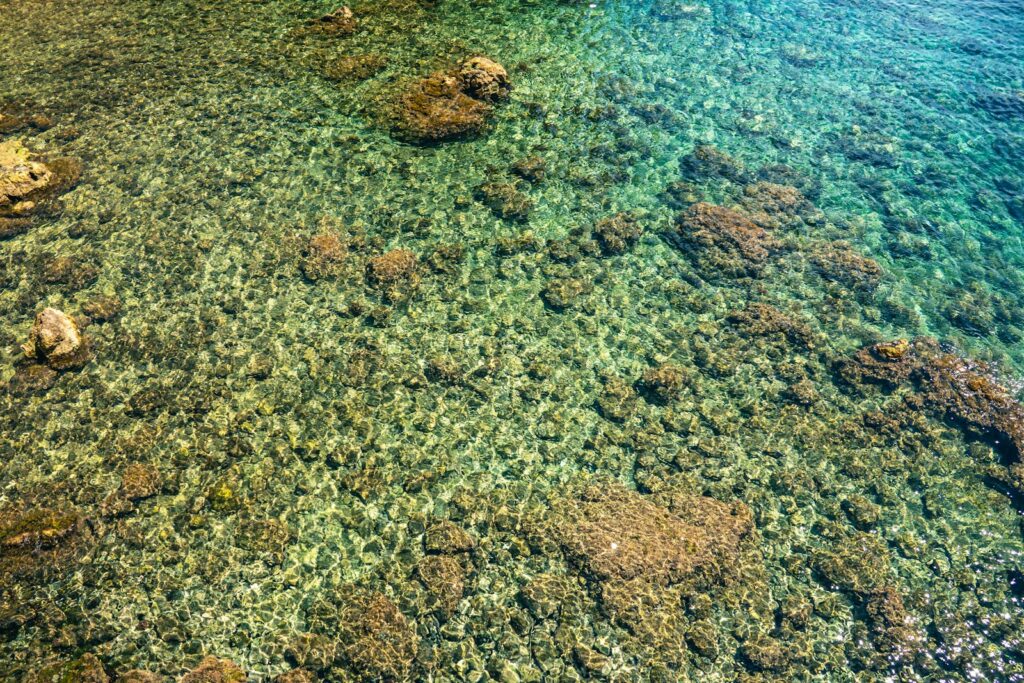
Reef-safe sunscreen for Komodo means choosing a mineral-based formula — zinc oxide or titanium dioxide — instead of chemical filters like oxybenzone or octinoxate. As of June 2026, there is no Indonesian national law and no Komodo National Park regulation that bans oxybenzone or octinoxate; unlike Hawaii or Palau, Indonesia has not enacted that specific prohibition. What exists is a strong conservation ethic among responsible operators, a well-documented body of coral-toxicity science, and a growing social norm in the dive-and-snorkel community. The short version: you will not be turned away at the gate for your sunscreen brand, but the reef will thank you for making the better choice — and a rash guard will do the job more completely than any bottle.
The Legal Reality: Best Practice, Not Law
Travel forums routinely claim that Komodo has banned chemical sunscreens. Some tour operators put it on their “must-bring” list as if it were a park rule. Neither is accurate.
Indonesia’s reef protection framework focuses on fishing restrictions, manta sanctuary enforcement (KEPMEN-KP No. 4/2014 made all Indonesian waters a manta sanctuary — the world’s largest), anchoring regulations, and the management of visitor numbers through systems like SiORA booking. The text of PP 36/2024, which updated the national park fee structure, does not address sunscreen chemistry. No secondary park regulation I have seen itemizes oxybenzone specifically.
That absence does not mean the science is soft. Studies published in peer-reviewed journals have shown oxybenzone induces coral bleaching at concentrations as low as 62 parts per trillion, causes DNA damage in young coral, and accumulates in marine sediment at popular snorkel sites. Komodo’s water clarity — typical visibility of 15–25 m in the dry season — is partly a function of the reef’s health. A degraded reef is not just an ecological problem; it is the product we come to see.
So the honest framing is this: reef-safe mineral sunscreen is the right call for Komodo, because the science supports it and the reef deserves it — not because a ranger will confiscate your Banana Boat at the dock.
What “Reef-Safe” Actually Means on a Label
The phrase “reef-safe” has no legal definition in Indonesia or most other countries. Any brand can print it. What actually distinguishes a lower-impact sunscreen is the active ingredient list.
- Mineral (physical) filters — lower reef impact
- Zinc oxide and titanium dioxide sit on the skin surface and scatter UV rather than absorbing it. Both appear in the scientific literature as significantly less harmful to coral larvae and adult polyps than oxybenzone. Nano-particle forms of these minerals are a contested area — some studies suggest nano-zinc and nano-titanium may still affect phytoplankton — so non-nano formulations are the cleaner choice if you want to go further.
- Chemical (organic) filters — higher reef impact
- Oxybenzone (benzophenone-3), octinoxate (ethylhexyl methoxycinnamate), octocrylene, and several others fall into this category. Hawaii and Palau have legislated against oxybenzone and octinoxate specifically. Indonesia has not, but both compounds are bioaccumulating in Komodo’s water column alongside the dive traffic.
- “Reef-safe” labels without mineral actives
- Some products use the phrase while still relying on octocrylene, homosalate, or avobenzone. Check the back of the bottle: if the active ingredient is not zinc oxide or titanium dioxide, the “reef-safe” marketing is aspirational at best.
For Komodo, the practical test is simple: flip the tube over and look for zinc oxide or titanium dioxide as the only active ingredient. Everything else is noise.
Where to Buy Genuine Mineral Sunscreen — and Why to Bring It From Home
This is where most guides skip the honest answer. Labuan Bajo has grown fast as a gateway town, and minimarkets, pharmacies, and dive shop retail shelves are better stocked than they were five years ago. You will find sunscreen. Whether that sunscreen is a genuine mineral formula is a different question.
The stock in Labuan Bajo skews heavily toward popular Indonesian mass-market brands — Biore UV, Wardah, Emina — which are predominantly chemical-filter products. Zinc-oxide-only formulas show up sporadically in the dive shops clustered along the main harbour street, and availability fluctuates week to week. In July and August, when the boats are full and the town is at peak season, the good stuff sells out quickly and restocking is slow.
Bali is better. The Kuta and Seminyak surf shops, the health food stores in Canggu, and several pharmacies near Sanur carry dedicated reef-safe mineral formulas — brands like All Good, Stream2Sea, Raw Elements, and locally produced options. If your itinerary routes through Bali first (Ngurah Rai airport connects to Labuan Bajo with a 1–1.5 hour flight), pick up your sunscreen there.
The most reliable approach is to pack it from home. A 3 fl oz / 88 ml tube clears carry-on rules in most countries and will last a two-week Komodo trip with room to spare. The brands that get consistently good field reviews among guides and liveaboard crew: All Good SPF 30 Sport (non-nano zinc, water-resistant), Badger Active SPF 30, Stream2Sea SPF 30. Sun Bum Mineral is a common pharmacy find in the US and Europe and does the job cleanly. None of these are paid recommendations — they are what people in the water at Karang Makassar actually use.
| Location | Mineral zinc/titanium availability | Notes |
|---|---|---|
| Home country before travel | Best — widest selection, best prices | Pack in checked bag if over carry-on limit |
| Bali (Canggu, Kuta, Sanur) | Good — several stores stock dedicated reef-safe brands | Surf shops and health food stores are better than pharmacies |
| Labuan Bajo dive shops | Hit-and-miss — stock varies by week | Peak season (Jul–Aug) depletes stock fastest; ask ahead |
| Labuan Bajo minimarkets / Alfamart | Low — mostly chemical-filter mass-market brands | Fine for casual beach days; not your reef-safe solution |
| Day boats and liveaboards | Rare — some operators stock it for sale; most do not | Do not assume the boat will have it |
Why a Rash Guard Is the Better Answer
Here is the practical truth that sunscreen marketing tends to bury: a rash guard eliminates the problem more completely than any formula in a tube. A long-sleeve UPF 50+ rash guard blocks over 98% of UV on the areas it covers. No reef residue, no reapplication every 40 minutes, no white cast, no sweating it off on the boat ride to the site.
Komodo’s water temperature ranges from about 25–26°C in the cooler months of July–August to 28–29°C in the warmer months of January–May. A thin lycra rash guard is comfortable across that entire range. Many snorkelers pair it with leggings — the combination covers all the surfaces that get the most sun exposure in the water (back of the legs, lower back, shoulders, neck) and removes the need for sunscreen on those areas entirely. You still need sunscreen for your face, neck behind the ears, and the backs of your hands — areas rash guards do not always cover fully.
For families with children, a rash guard plus mineral sunscreen on the face and hands is genuinely the best combination. Kids move constantly, they splash, they forget to stay flat at the surface, and sunscreen washes off faster on active bodies in warm water. Covering them physically is more reliable than any topical product.
On the boat between snorkel stops, the equatorial sun at Komodo is direct and fierce. A lightweight long-sleeve shirt — not necessarily the rash guard itself — will save you from a burn that ruins the second half of the trip. Pack one even if you think you will not need it.
Application Timing: The Detail That Matters Most
Whether you are using mineral or chemical sunscreen, timing the application correctly reduces the amount that enters the water. Chemical sunscreens need 15–20 minutes to bind to the skin before they are effective, so most instructions already push you to apply them before you leave the room or the boat. Mineral sunscreens work immediately on application, which is one reason guides prefer them operationally.
The practical rule for a Komodo day trip is this: apply sunscreen 30 minutes before you get in the water. The product needs time to set, some absorption to occur, and the white cast from zinc oxide needs time to blend in if that matters to you. Applying on the swim platform a minute before you roll off into the water sends most of it straight into the reef.
At Karang Makassar (Manta Point), where the current runs and the group enters up-current on the guide’s signal, you will be in the water for a meaningful stretch — typically 30 to 60 minutes depending on current and manta activity. A single application that was put on properly before the boat reached the site will hold reasonably well. Water-resistant formulations (rated to 80 minutes) perform better here than standard ones. Reapplication on the swim platform between spots, not in the water, is the correct approach for a multi-stop day.
A few other specifics worth knowing:
- Avoid applying sunscreen near coral in shallow water. At sites like Siaba Besar (Turtle City), where the reef comes up to 2 m and you are floating close to coral heads, the concentration effect of sunscreen washing directly from a group of snorkelers onto a small reef patch is real. Apply before the boat reaches the site.
- Lips get burned faster than most people expect. A reef-safe zinc-based lip balm with SPF 30 is worth packing separately — most sunscreens are not formulated to stay on lips while you have a snorkel in your mouth.
- Post-snorkel rinsing. Fresh water rinsed over your face after the session will remove residual sunscreen before it enters the water on the next entry. It is a small habit that adds up over a full-day trip with four or five entries.
Gear Context: Where Sunscreen Fits in the Full Packing Decision
Day boats from Labuan Bajo typically provide a mask, snorkel, and sometimes fins. Wetsuit and rashguard are generally not provided — you wear your own or go without. Most operators do not carry sunscreen for guests, and when they do, it is rarely a mineral formula.
The broader gear advice is to treat sunscreen as one component of a sun-and-reef protection system, not a standalone solution:
- Rash guard (UPF 50+, long sleeve): non-negotiable for a full day on the water; reduces sunscreen need by roughly 80% of your body surface
- Mineral sunscreen (zinc oxide or titanium dioxide, SPF 30 minimum): for face, neck, backs of hands, any exposed skin the rash guard does not cover
- Hat or buff: for the boat transit between sites, when you are out of the water and the equatorial sun hits at full strength
- Polarised sunglasses: reduces reflected glare off the water, which contributes to eye fatigue and headaches on a full day trip
On a 6–8 hour day trip covering multiple spots from Padar to Manta Point, you spend maybe 2–3 hours in the water and the rest on deck. The deck time, particularly on the open-ocean runs between western Komodo sites, is when sunburn accumulates fastest. Covering up physically — long sleeves, hat — protects more effectively than any sunscreen reapplication schedule.
Ready to plan your Komodo snorkeling itinerary? Our concierge team knows which operators carry reef-safe gear and can match you to the right boat for your group. Visit our planning page or drop us a message on WhatsApp — we are happy to talk through options before you commit.
The Conservation Case, Plainly Said
Komodo National Park sits at the intersection of the Pacific and Indian Oceans, inside the Coral Triangle — the region with the highest marine biodiversity on earth. The reef ecosystem here supports roughly 1,000 fish species and 260 coral species, and it is the same ecosystem that draws manta rays, turtles, and reef sharks to the sites you have come to snorkel. That ecosystem is under measurable pressure: rising water temperatures, coral bleaching events, and the cumulative impact of tens of thousands of visitors per year.
Individual sunscreen chemistry is not the primary threat to Komodo’s reef — anchor damage, runoff from the growing town of Labuan Bajo, and climate-driven bleaching are all more significant. But visitor-introduced chemical load is one of the factors that is completely within individual control. The cost of switching to a mineral formula is a slightly higher price per tube and occasionally a white cast you have to rub in more thoroughly. That tradeoff is not complicated.
No one can pay us to change what we publish. If our free planning help proves useful and you go on to book through one of our recommended operators, they may pay us a referral fee — at no extra cost to you. That is how independent guides like this one stay online.
FAQs
Is there a legal ban on oxybenzone sunscreen in Komodo National Park?
No. As of June 2026, Indonesia has no national law and Komodo National Park has no specific regulation banning oxybenzone or octinoxate. The bans that receive the most media attention are in Hawaii (2021) and Palau (2020). Using mineral reef-safe sunscreen in Komodo is strongly recommended best practice based on coral-toxicity science — it is not a legal requirement. Confirm the current situation with your operator before travel, as conservation policies evolve.
Where can I buy reef-safe mineral sunscreen in Labuan Bajo?
A handful of dive shops along Labuan Bajo’s harbour area carry mineral formulas, but stock is inconsistent and tends to sell out in peak season (July–August). Your best options are to bring it from home, pick it up in Bali before flying to Labuan Bajo, or check with your tour operator whether they stock it. Minimarkets and supermarkets in town carry sunscreen but mostly mass-market chemical-filter brands. Do not assume you can buy a genuine mineral formula on the day of departure.
Is a rash guard enough, or do I still need sunscreen?
A long-sleeve UPF 50+ rash guard covers roughly 80% of your body surface and blocks over 98% of UV on those areas. You still need mineral sunscreen for exposed skin — face, neck, ears, backs of hands, and any gaps at the collar or wrist. For a full-day Komodo trip, the combination of a rash guard and mineral sunscreen on uncovered areas is more effective and more reef-friendly than relying on sunscreen alone.
Should I apply sunscreen before getting on the boat or at the snorkel site?
Apply it at least 30 minutes before your first water entry — ideally at your accommodation before leaving for the harbour. Applying sunscreen immediately before entering the water, on the swim platform or ladder, sends most of the product directly into the reef. Mineral sunscreens are effective on contact, but they still need time to set properly. Reapply between snorkel stops on deck, not in the water.
Do Komodo day-trip operators provide reef-safe sunscreen?
Most do not. Standard day-trip inclusions are typically a mask, snorkel, lunch, water, and sometimes fins. A few operators with a strong conservation focus carry mineral sunscreen for sale on board, but this is not the norm. Treat it the same way you treat your own mask — bring what you need rather than assuming the boat will have it. If this matters to your group, ask the operator directly when booking, and we can help match you with operators whose gear approach aligns with yours via our planning form or on WhatsApp.