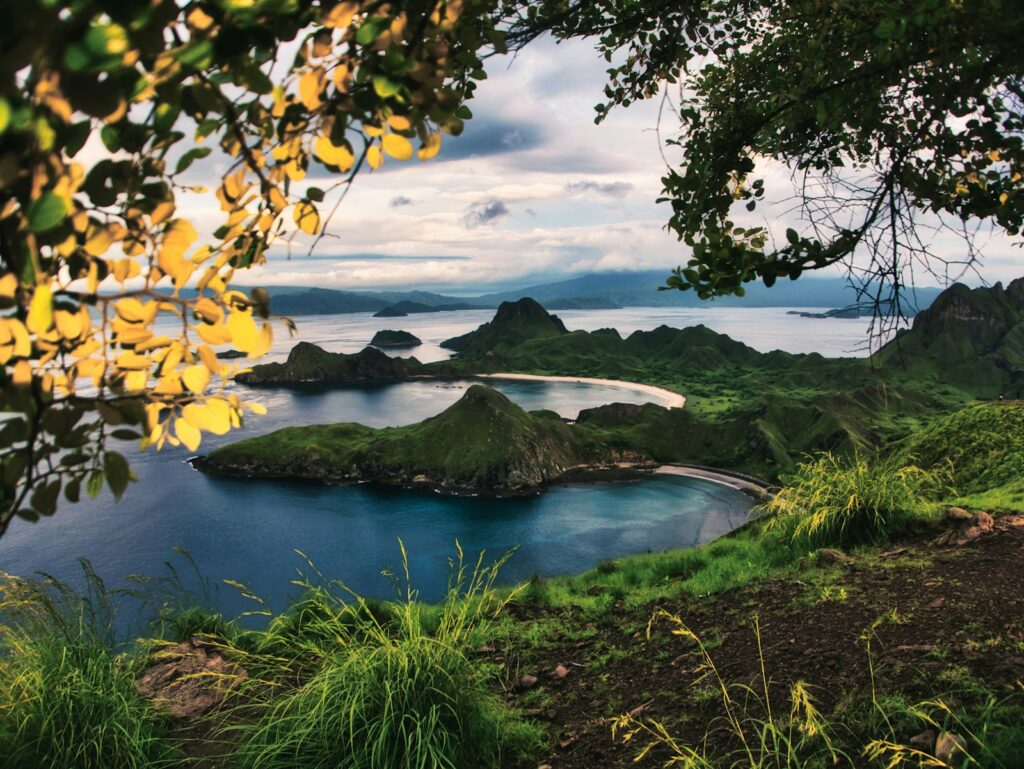
An independent Komodo snorkeling guide is what this site is — and that phrase is doing real work, not marketing work. This is not a tour operator selling seats, not the official Komodo National Park authority, and not a dive shop trying to convince you to get certified before you leave. It is a planning resource written from a snorkeler-first perspective: which spots suit which swimmers, what the currents actually do at which tides, what you will pay and in what currency, and what the park genuinely promises versus what no honest guide should ever claim. Those are the questions snorkelers ask. They are the questions this site is built to answer.
Who Writes This
This site is written by our editorial desk. I grew up on the Flores coast and have led snorkel groups in Komodo National Park for years. Reading the current at Karang Makassar before anyone gets in the water is part of the job — and the part I take most seriously. The same goes for deciding whether a site like Mawan is a good call for a given group on a given morning, or whether we skip it and add time at Siaba Besar instead. That judgment is not something you find on a booking page.
The editorial decisions on this site are mine. The fee figures, the seasonal data, and the price ranges are cross-checked against multiple public sources and marked with “last verified June 2026” where figures are known to shift or where the underlying regulation text has not been independently confirmed. Current speeds at snorkel sites are described as qualitative grades — strong, mild, protected — because no instrumented measurement data exists for these sites and inventing numbers would be dishonest. Manta and turtle sightings are described as possible, typical, or rare depending on the site; no encounter is ever guaranteed, because that would be a lie.
What This Guide Is Not
It is not the park. Komodo National Park is administered by Balai Taman Nasional Komodo (BTNK), a unit of the Indonesian Ministry of Environment and Forestry. Entrance fee regulations, booking system requirements, and conservation rules are set by the Indonesian government. When those regulations change — as they did when PP 36/2024 replaced the old tariff structure in PP 12/2014, triggering operator protests in October 2024 — this site updates its fee tables and flags them accordingly. We are not a substitute for the official park authority; we synthesize secondary-source consensus and point readers toward operators who handle the official SiORA pre-booking process directly.
It is not a liveaboard aggregator or OTA. There are category pages that list 60 boats with thin text wrapping the listings. That format serves a different purpose. This site does not sell berths or boats directly. It helps you understand what to look for before you choose.
It is not a dive guide. There is a separate site for serious divers who want the Batu Bolong wall or Castle Rock at depth. Snorkeling and scuba serve different audiences in Komodo and the distinction matters: the best snorkel sites and the best dive sites overlap in some places and diverge sharply in others. Building both from the same page leads to confused advice. This guide stays at the surface — which is, genuinely, a good place to be in this park.
Our Affiliation: Stated Once, Stated Plainly
Booking enquiries submitted through this site route to Komodo Luxury. Komodo Luxury is a specialist tour operator and a sister brand within Juara Holding Group. This site and Komodo Luxury share the same ownership group. That is the affiliation, and it is disclosed on every booking touchpoint — not buried in a footer, not softened into ambiguity.
What this means in practice: the planning and editorial content is written to help you make a well-informed decision regardless of which operator you end up choosing. No one can pay to change what we publish. If you use our free planning help and proceed with a tour through our partner, they may pay us a referral fee at no extra cost to you. We do not claim otherwise.
What it does not mean: this site will never tell you that every tour through Komodo Luxury is the correct choice for every traveler. Some itinerary types — budget shared open-trip boats, for example — are not part of Komodo Luxury’s offering at all. The price and format comparisons on this site include those options because withholding them would make the guide useless.
If you want to compare options for your specific dates and group, use our planning form — or reach us on WhatsApp for a quick conversation first. We match group size, swim ability, and budget to itinerary format before anything gets recommended.
Editorial Standards: How We Handle Numbers
Every category of figure on this site is handled differently depending on how reliable the underlying source is. The table below documents the approach.
| Figure type | How we source it | How we label it |
|---|---|---|
| Park entrance and activity fees | Cross-checked across multiple operator and third-party sources; official PP 36/2024 annex text not independently verified against primary regulation | “last verified June 2026, confirm with your operator” |
| Tour prices | Multi-operator market survey; no single operator’s fixed tariff is published as representative | Published as ranges (e.g., Rp 1,400,000–1,600,000 per person); flagged as volatile in peak season |
| Current strength | No instrumented current-speed data exists for Komodo snorkel sites; description is consensus of operator safety briefings and independent trip reports | Qualitative grades: “strong”, “mild”, “protected” — never a fabricated km/h figure |
| Depths | Mix of operator site maps, dive briefing summaries, and trip reports; not verified by independent survey | Given as ranges with “approximate” or “reported” flagging where sourcing is thin |
| Manta and turtle sightings | Encounter-rate percentages are not published by any operator or scientific body for these sites | “Possible”, “typical”, or “seasonal peak” — never “guaranteed” |
| Visibility and water temperature | Monthly table drawn primarily from resort climatology data — a single primary source cross-checked against operator reports | “Typical reported ranges, last verified June 2026” |
| Legal and regulatory claims | Where a specific law or ministerial decree is cited (e.g., KEPMEN-KP No. 4/2014 on manta protection; SiORA mandatory booking), the legal basis is stated; where implementation detail is uncertain, it is flagged explicitly | Law number cited; implementation notes labeled as operator-reported, not officially verified |
The practical result of this approach: you will see more uncertainty flags on this site than on most Komodo tour pages. That is intentional. A page that quotes a single definitive park fee without acknowledging that the fee structure changed twice in two years and that the official annex is not publicly archived in searchable form is not being thorough — it is performing confidence. We prefer to give you the range, flag the contested figure, and tell you to confirm with the operator before you arrive at the dock with the wrong amount of cash.
What the Park Fees Section Actually Contains
Because fee confusion is one of the most common sources of friction at Komodo — visitors arrive expecting one number and encounter another — we document the fee structure in more detail than most guides bother with. Here is what that section covers and the confidence level behind each line item.
- Foreign visitor entrance fee
- Rp 250,000 per person per day — high confidence, multi-source consensus for 2026. The old Rp 150,000 weekday rate under PP 12/2014 is historical; do not rely on pre-2024 figures.
- Domestic (WNI) entrance fee
- Rp 50,000 weekday / Rp 75,000 Sunday and public holiday — medium confidence (two sources, no official text verified).
- Snorkeling activity fee
- No separate snorkeling surcharge appears in any 2026 fee table. The historical Rp 15,000 snorkel fee was PP 12/2014 era and appears to have been folded into the base entry. As of June 2026, snorkelers pay base entry only — but the official PP 36/2024 annex has not been independently verified, so flag this with your operator.
- Diving surcharge
- Rp 25,000 per diver per day. Snorkelers are exempt. High confidence.
- Harbor fee
- Rp 25,000 per person. High confidence.
- Conservation fee
- Rp 100,000 per foreign visitor / Rp 10,000 domestic. Reported by some 2026 sources, absent from others. Contested — bring cash to cover it and ask your operator what they see in practice.
- Ranger fee (island landings)
- Rp 200,000 per group of up to 5 at Komodo or Rinca; Rp 150,000 per group of up to 5 at Padar. Snorkel-only itineraries with no island landing skip these entirely.
The figures above are the reason we tell every reader: bring Rp 400,000–550,000 per foreign adult in cash for a full itinerary with island landings. That is what multi-source research produces as the realistic day-total when all line items are stacked. If your tour departs Labuan Bajo and the operator tells you a very different number, ask them to walk through it line by line.
How We Handle Manta Sightings
This comes up enough that it deserves its own section. Manta rays are the most emotionally compelling reason many people book a Komodo trip. Some pages, and some operators, exploit that. “Guaranteed manta sighting” is a phrase that appears on tour listings. It is not a claim any honest guide can make.
What the evidence actually supports: mantas are seen by snorkelers at Karang Makassar (Manta Point) throughout the year. The highest aggregation density is typically in the November–February plankton season, when feeding concentrations are strongest. Sightings in June, July, and August are regularly reported — this is peak tourist season, not off-season for mantas. Encounter rates expressed as percentages are not published by any operator or research body for this site. Nobody knows the number. Any guide that publishes one has made it up.
Snorkelers at Karang Makassar float over the sand plateau and watch mantas feeding and cruising in the top 0–5 m of the water column. On calm mornings the animals regularly break the surface. Divers at 8–15 m get the cleaning-station encounters that are closer and longer; snorkelers get the open-water passes. Both are real experiences. Neither is guaranteed on any given day.
The manta code of conduct on this site follows Manta Trust best practice guidelines and is noted against Indonesia’s legal protection framework under KEPMEN-KP No. 4/2014, which designated all Indonesian waters a manta sanctuary. The distancing guidance — 3–4 m from the body, 4–5 m from the tail — is Manta Trust best practice, not codified Indonesian law. We flag that distinction because it matters if you are trying to understand what an operator is legally required to enforce versus what they should be doing as responsible practitioners.
Planning a trip and want to know which month gives you the best combination of manta odds, visibility, and manageable boat traffic? Talk to our concierge or message us on WhatsApp — we can give you a straight read on what the conditions look like for your target dates.
A Note on Beginner and Family Safety
A recurring gap in online Komodo information is honest guidance for non-swimmers, weak swimmers, and families with children. Most operator pages say something like “suitable for all abilities” and leave it there. This site does not do that, because it is not true for every site on the standard day-trip circuit.
Karang Makassar (Manta Point) is a drift snorkel site with currents rated strong — typically 1–3 km/h by estimate, not measurement. It is not appropriate for non-swimmers without a guide in the water alongside them, and some reputable operators simply do not send non-swimmers in at that site regardless of conditions. Mawan has strong current and is for experienced snorkelers only. Taka Makassar sandbar edges toward a tidal channel that is hazardous on a running tide.
Siaba Besar, Kanawa, and the inner bay at Pink Beach are genuinely beginner-friendly. Turtle sightings at Siaba Besar in 2–6 m of water with mild current are realistic for someone snorkeling for the first time. These are the sites we recommend leading with for any group that includes weak swimmers or children.
On children: there is no park-wide minimum snorkeling age. Operator norms set the practical threshold — typically 6 years old and above for snorkeling, 4–6 years old as a boat passenger. Current-prone sites like Manta Point and Mawan are not appropriate for young children. Child-size masks and life jackets are available on dive-center-run boats; budget operators may not carry them. Bring your own child PFD if you are traveling with children under 10 and are not sure of the operator’s equipment inventory. These are operator norms, not park regulations — ask directly before you book.
Frequently Asked Questions
Is this site affiliated with any tour operator?
Yes, and we state it plainly: booking enquiries on this site route to Komodo Luxury, a specialist operator and sister brand within Juara Holding Group. The two brands share the same ownership group. That relationship is disclosed here and on every booking touchpoint. The editorial content is written to inform your decision, not to steer every reader toward one product. If you use our free planning help and proceed with a partner, they may pay us a referral fee at no extra cost to you.
Why do your price ranges differ from what I see on other sites?
Because we publish ranges across the market, not a single operator’s list price. A shared speedboat full-day tour from Labuan Bajo runs approximately Rp 1,400,000–1,600,000 per person at mid-market, with the broader span running USD 60–150 depending on operator quality, group size, and season. Budget tours at the low end exist; they also tend to carry older gear, larger groups, and less attentive guides. Premium private charters at the high end go to Rp 18,500,000 per day and above. All figures are last verified June 2026 and shift with peak-season demand. Figures from 2016 trip reports that still circulate online are not a reliable benchmark.
How current are your park fee figures?
Last verified June 2026, from multi-source secondary research. The underlying legal basis is PP 36/2024, which replaced PP 12/2014 after the October 2024 operator protests in Labuan Bajo. We have not independently verified the official PP 36/2024 annex text against primary regulation documents — the consensus foreign entrance fee of Rp 250,000 per day comes from multiple operator and travel sources, not from the official gazette. Fees can and do change. Confirm with your operator before departure and bring sufficient cash: Rp 400,000–550,000 per foreign adult covers a full itinerary with island landings including ranger shares, based on current multi-source estimates.
Do you publish information about diving sites too?
No. This site focuses on snorkeling from the surface. Advanced diving sites in Komodo National Park — Batu Bolong, Castle Rock, Crystal Rock, Manta Alley at depth — require Open Water certification at minimum and often Advanced certification plus logged dives. Those sites and the operators who run dive trips to them are covered by a separate specialist resource. Snorkeling and diving in Komodo serve genuinely different audiences, and keeping them on separate sites produces better, more focused advice for each.
Can I trust the manta season information on this site?
You can trust that we are not inflating it. The strongest manta aggregation window at Karang Makassar is broadly November–February, when plankton concentrations peak. Mantas are seen year-round, including in the June–August peak tourist season. Encounter rates expressed as percentages do not exist — no operator or scientific body publishes them for this site. Anyone who gives you a specific “80% chance of seeing mantas” figure has made that number up. We describe the season honestly: higher probability in the plankton peak, real but lower probability in the dry season, and zero guarantees on any given day.