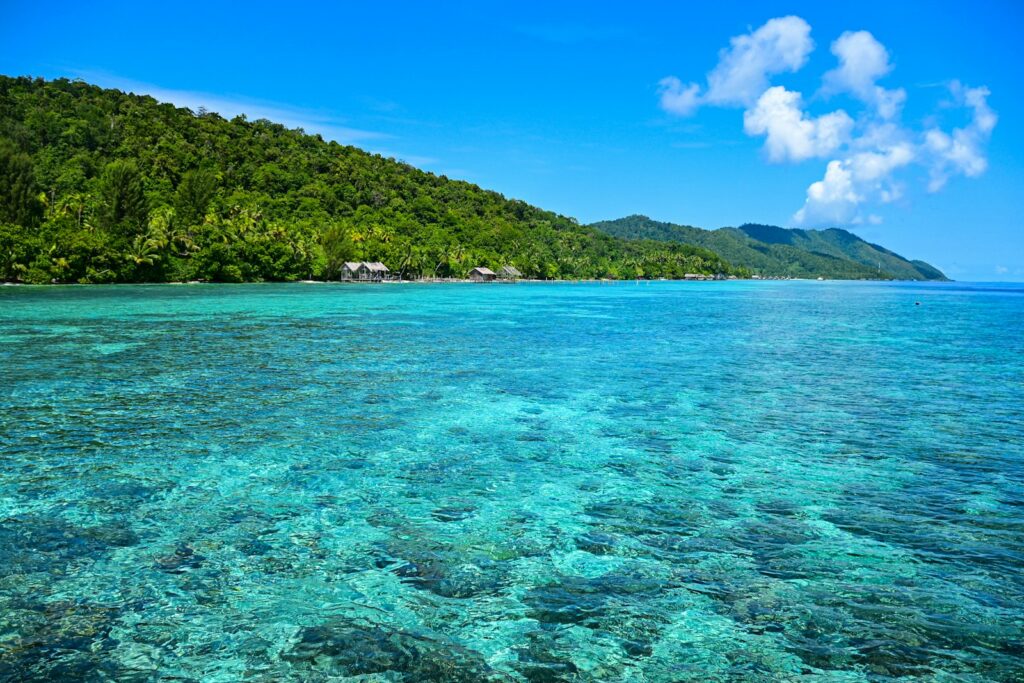
The best time to snorkel Komodo depends entirely on what you are optimizing for. If calm seas, good visibility, and safe surface conditions matter most, the dry season from April through November is your window — May typically reports peak visibility of 20–30 m. If manta rays are your priority, the math inverts: manta aggregation at Karang Makassar peaks roughly November through February, during the plankton-rich wet season. Both answers are correct. They describe different goals. This page builds a month-by-month table from a single resort climatology source (typical reported ranges, last verified June 2026) and then explains exactly where the SERP contradictions come from, so you can make a decision that matches your actual trip.
Why Every Source Gives a Different Answer
Search “best time to snorkel Komodo” and you will find waturandatrip telling you April–September is peak manta season, while liveaboard.com says December–February brings the most manta sightings. Both sources are drawing from real observations. They are just measuring different things.
The dry season (roughly April to November) brings consistent southeast trade winds that flatten the Flores Sea and hold surface chop to a manageable level. Visibility climbs as river runoff decreases and plankton blooms thin out. May is consistently the month where visibility reports reach their ceiling — 20 to 30 m in central Komodo, based on recorded resort data. That is also when the park is quietest before the July–August peak crowd season arrives.
Manta rays behave differently. Oceanic mantas at Karang Makassar (Manta Point) congregate to feed when plankton concentrations are highest. That happens during the northwest monsoon, roughly November through February, when nutrient-rich water upwells and mixes into the feeding zone. The tradeoff is real: those months also bring the roughest seas of the year, the most day-trip cancellations, and occasional harbor closures by KSOP Labuan Bajo when swell exceeds safe thresholds.
Neither camp is lying. The contradiction exists because snorkeling in Komodo involves two distinct goals that peak in opposite seasons. The table below maps all five variables by month so you can see where they intersect — and where they conflict.
Month-by-Month Table: Visibility, Temperature, Sea State, Crowds, Manta Likelihood
All visibility figures are typical reported ranges from a single resort climatology, last verified June 2026. Water temperature data traces to the same source. Sea state reflects general dry/wet season patterns for central Komodo, not measured wave heights. Manta likelihood is described qualitatively — no operator publishes encounter-rate percentages, and we will not invent them.
| Month | Visibility (central Komodo) | Water Temp | Sea State | Crowds | Manta Likelihood |
|---|---|---|---|---|---|
| January | 10–15 m | 28–29°C | Rough; cancellations likely | Low | High (peak aggregation season) |
| February | 10–15 m | 28–29°C | Rough; harbor closures possible | Low | High (plankton peak) |
| March | 15–20 m | 28–29°C | Improving; transitional | Low–Moderate | Moderate–High (season tailing off) |
| April | 20–25 m | 28–29°C | Calm; dry season onset | Moderate | Moderate (possible year-round) |
| May | 20–30 m (reported peak) | 28–29°C | Calm; excellent | Moderate | Moderate (possible year-round) |
| June | 20–25 m | 27°C | Calm; trade winds settling in | Moderate–High | Moderate (possible year-round) |
| July | 15–25 m | 25–26°C | Calm surface; stronger subsurface currents | Peak (school holidays) | Moderate (possible year-round) |
| August | 15–25 m | 25–26°C | Calm surface; strongest currents of year | Peak | Moderate (possible year-round) |
| September | 15–25 m | 25°C | Calm; currents easing | Moderate | Moderate–Low |
| October | 20–25 m | 26°C | Good; transition beginning | Low–Moderate | Moderate (pre-season building) |
| November | Not separately reported; likely 15–20 m | 26–27°C (est.) | Variable; first rains | Low | Moderate–High (aggregation building) |
| December | 10–15 m (est.) | 28°C (est.) | Rough; cancellations begin | Low (except Christmas week) | High (aggregation at full strength) |
November and December estimates are inferred from seasonal patterns; the resort climatology data does not include these months explicitly. Use them as orientation only. Last verified June 2026 — confirm current conditions with your operator before booking.
The Honest Verdict by Season
Dry Season: April to November
For most snorkelers — beginners, families, anyone who prioritises calm entry conditions and clear water — the dry season is the right choice. The Flores Sea settles, day-trip cancellations are rare, and visibility holds consistently above 15 m across the park. May stands out: in a typical year it combines the highest recorded visibility (some resorts note 20–30 m) with warm water (28–29°C) and moderate crowd levels before the July–August rush.
One thing the dry season does not guarantee is mantas. Manta rays are seen at Karang Makassar year-round, but the aggregations that make May–September feel reliable are smaller than the November–February plankton feast. You can still encounter them on a dry-season morning — the current and tide timing matter as much as the calendar — but a guide who says “guaranteed mantas in July” is not telling you the truth.
July and August: Calmest Seas, Peak Crowds, Cold Water
Right now, in June–August, is the peak travel season. That means several things simultaneously. Surface conditions are the calmest of the year — trade winds have suppressed swell and the Flores Sea is often glassy in the morning. Visibility is good: 15–25 m is the typical reported range. Crowds are at their maximum, with European and Australian school-holiday visitors filling the shared speedboats and pushing prices toward the upper end of the bracket (Rp 1.5–1.8 million per person on shared day tours, last verified June 2026).
The water is noticeably cold by tropical standards. July–August temperatures drop to 25–26°C in central Komodo, and sites in the southern park — closer to Indian Ocean upwelling — can run several degrees cooler still, with some reports citing 22–25°C. A shorty wetsuit (2–3 mm) is worth packing if you plan long sessions or visit southern sites. A rashguard alone is often insufficient for multiple water entries on a full day.
Manta encounters during July–August are possible. The plankton aggregation is not at its November–February peak, but Karang Makassar produces sightings across the dry season on good-current mornings. Do not book a trip with mantas as the sole reason if you are traveling in July. Go for the full experience — turtles at Siaba Besar, coral at Kanawa, the Pink Beach shore — and treat any manta encounter as a welcome addition.
Wet Season: November to March
The wet season is when the manta math works most strongly in your favour. Plankton blooms across central Komodo draw reef mantas and oceanic mantas to Karang Makassar in higher numbers than at any other time of year. Visibility, paradoxically, is lower — plankton-rich water scatters light — but the actual encounters at the surface can be extraordinary on the right morning.
The operational risk is real. December through February is the northwest monsoon peak. Storms form quickly, swell can exceed safe thresholds overnight, and KSOP Labuan Bajo (the harbor authority) does close the port on short notice. There are no public statistics on how many days per month closures occur — any operator or travel site quoting a specific percentage is inventing it. What experienced guides say is this: budget at least two extra days if you travel December–February, because your first-choice day trip may not sail.
January and February are the roughest months. For most non-specialist snorkelers, the combination of choppy seas, lower visibility, and cancellation risk makes these months a poor choice unless mantas are the explicit goal and you have flexibility built into your itinerary. March is transitional — seas improving, visibility climbing toward 15–20 m, manta aggregation tailing off.
What the Contradictions Actually Come From
The specific confusion in search results — one source saying April–September is peak manta season, another saying December–February — has a traceable source. Operators that run mostly dry-season tours have observed mantas consistently during peak travel months and marketed accordingly. Dive liveaboard operators, who run year-round and track their own encounter data, have logged their highest manta densities in the wet season. Neither is fabricating data. They are measuring different things: reliability of encounters versus maximum density of encounters.
The visibility contradiction (some sources quoting 15–30 m dry season, others quoting 20–25°C south park temperatures as cold as 22°C) comes from mixing data across different parts of the park. Central Komodo — around Karang Makassar and the main day-trip corridor — follows the seasonality in the table above. The southern sites, including Manta Alley (a dive-first site), receive strong Indian Ocean upwelling that drops temperatures significantly regardless of season. Those sites are not accessible on most standard day trips from Labuan Bajo anyway.
For a snorkel-first planner, the practical takeaway is this: trust seasonal patterns for central Komodo, verify conditions with your operator in the week before departure, and build your primary itinerary around the calm-sea sites rather than the drift sites when conditions are uncertain.
Planning a Trip Right Now? A Few Practical Notes
If you are reading this during the June–August peak, here is what to act on. Book shared day trips at least a week ahead — cheap seats on reputable boats sell out in July, and last-minute options tend to be the oversized, rushed-six-stop runs where snorkel time per site shrinks to 20–30 minutes. Park fees are paid separately in cash: as of June 2026, the most consistent multi-source figure is Rp 250,000 per person per day for foreign visitors, plus a Rp 25,000 harbor fee, with an additional Rp 100,000 conservation fee reported by some operators but contested by others. Bring at least Rp 400,000 per person in cash for a full-day itinerary; Rp 550,000 if your route includes Padar landing and a ranger-guided Komodo dragon visit.
The SiORA booking system (Sistem Informasi Online Reservasi Wisata Alam) has been reported as the mandatory pre-booking channel since April 2026, with walk-in ticket sales reportedly ended. Most operators handle SiORA booking on your behalf — confirm this when booking your tour. Last verified June 2026; confirm with your operator before travel.
Gear note for the current season: rental masks on shared budget boats are often scratched or poorly fitted. At 25–26°C water, a loose seal means cold water flooding the mask every few minutes. Bring your own mask if you have one. If not, test the fit on the boat before entry — press gently, inhale through the nose, and check that it holds suction without the strap. A few seconds of checking avoids a frustrating hour in the water.
Ready to plan specifics? Use our planning form or reach us via WhatsApp to match your travel dates, budget, and snorkel experience level to the right tour format. No one can pay to change what we publish here; if you proceed with our partner operator Komodo Luxury (a sister brand within Juara Holding Group, disclosed), they may pay us a referral fee at no extra cost to you.
Southern Sites and Temperature Outliers
One source of confusion not covered above: the southern Komodo sites — Manta Alley in particular — operate on a different temperature profile because of Indian Ocean upwelling. Water as cold as 22–25°C is reported at southern sites even during months when central Komodo is at 28–29°C. This is not seasonal variation; it is geographic. These sites are primarily accessed on liveaboard itineraries, not standard Labuan Bajo day trips, and most of the key sites (Castle Rock, Crystal Rock, Batu Bolong, Manta Alley) involve depths and currents that are outside the snorkeler’s range regardless of season. If you are snorkeling from a day boat based in Labuan Bajo, the central-Komodo temperature and visibility data in the table above applies to your actual itinerary.
Frequently Asked Questions
Is June a good month to snorkel in Komodo?
June is one of the stronger months for snorkeling in Komodo. Seas are calm as the dry season trade winds establish, visibility typically runs 20–25 m in central Komodo, water temperature is around 27°C, and crowds are building but not yet at peak July–August levels. Manta encounters are possible though not at their November–February aggregation peak. If you have flexibility, early-to-mid June offers a good balance of conditions, availability, and price before school-holiday demand pushes shared boat seats toward the upper end of the range.
When is manta season in Komodo for snorkelers?
Manta rays are seen at Karang Makassar (Manta Point) throughout the year — sightings are possible on any month with the right tide and current timing. The aggregation is largest and most reliable roughly November through February, when plankton blooms peak during the northwest monsoon. That period also brings rougher seas, lower visibility (10–15 m), and a higher risk of day-trip cancellations. For snorkelers who want the best chance at a surface encounter while maintaining safe, comfortable conditions, October and November offer a reasonable compromise: seas are still manageable, the aggregation is building, and crowds have thinned significantly from the July–August peak.
Is snorkeling in Komodo safe during the rainy season (December to February)?
It is not inherently unsafe, but the risk profile is higher than the dry season. Storm systems form quickly in the Flores Sea during the northwest monsoon, and KSOP Labuan Bajo (the harbor authority) does close the port on short notice when swell exceeds safe thresholds. There are no public statistics on closure frequency — any source quoting a specific number is estimating. Practically: build two extra buffer days into any December–February itinerary, book a reputable operator with a clear cancellation and rebooking policy, and keep mantas as the goal rather than a guaranteed outcome. If your schedule has no flexibility, the dry season is a lower-risk choice regardless of manta preferences.
What is the water temperature in Komodo for snorkeling, and do I need a wetsuit?
Central Komodo water temperature ranges from around 25–26°C in July–August (the coolest period) to 28–29°C from January through May. Southern park sites run cooler — some reports cite 22–25°C year-round from Indian Ocean upwelling, though most standard day trips from Labuan Bajo do not reach those sites. For most snorkelers, a rashguard and leggings are sufficient from November through June. July through September, when water drops to 25–26°C, a shorty 2–3 mm wetsuit is worth packing, especially for multiple water entries on a full-day tour. Cold water does not make snorkeling dangerous, but it shortens comfortable in-water time considerably, which matters on a park where your session at Siaba Besar or Manta Point may run 30–60 minutes.
Does park entry cost more for snorkelers than for divers?
No — and this is actually one of the few financial advantages of snorkeling over diving in the park. As of June 2026, the base foreign visitor entrance fee is Rp 250,000 per person per day regardless of activity. Divers pay an additional Rp 25,000 per diver per day; snorkelers are exempt from this surcharge. No separate snorkeling activity fee appears in any 2026 fee table — the old Rp 15,000 snorkeling fee from the PP 12/2014 era was abolished or bundled when PP 36/2024 revised the tariff structure. A harbor fee of Rp 25,000 per person applies to all visitors. A Rp 100,000 conservation fee is reported by some operators but not confirmed in all sources — budget for it to be safe. These figures are secondary-source consensus, last verified June 2026; confirm with your operator before travel as park fee structures can change without advance notice.
Still deciding on dates or tour type? Plan your trip with us — our planning form covers timing, group size, skill level, and budget. WhatsApp planning is available for faster back-and-forth if your dates are close.