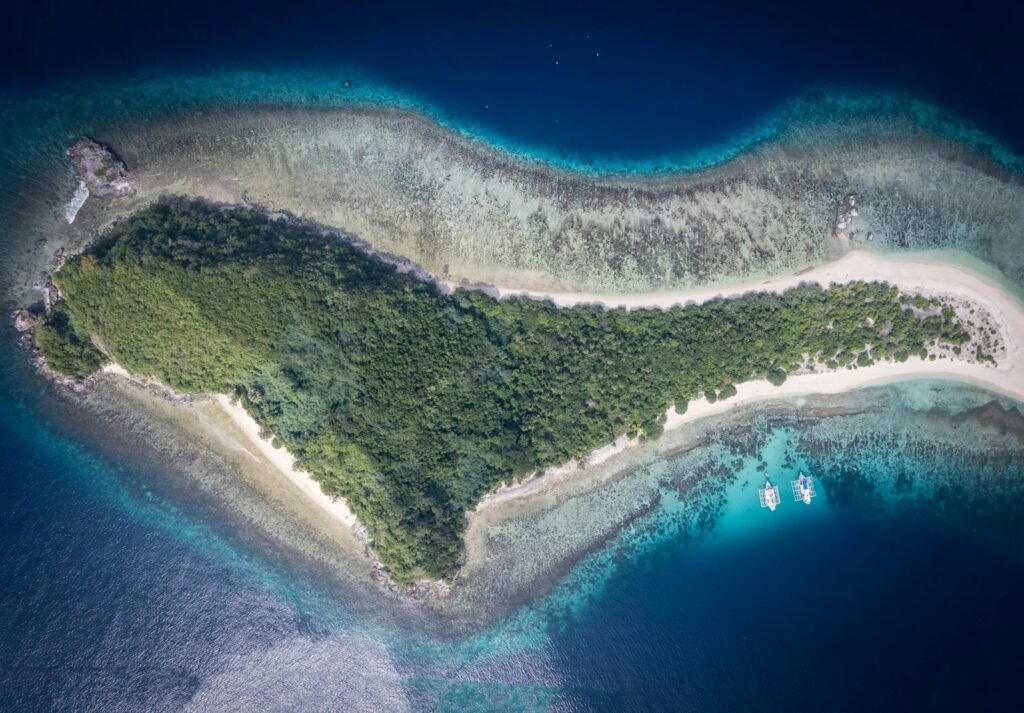
Kanawa Island snorkeling is beach-entry reef access from the shallows — roughly 1–2 m at the sand edge, sloping to an estimated 5–8 m (depth range inferred; flag with your operator before entry) — with current rated mild to protected and consistently strong visibility. It is one of the most beginner-accessible snorkel stops in Komodo National Park, and for first-timers getting into the water for the first time that day, it sets the right tone: calm enough to relax, rich enough to reward.
Kanawa sits roughly 17 km northwest of Labuan Bajo, close enough that speedboat day trips reach it without burning the whole morning in transit. It is a small island with a resort on it, so the reef is a functioning house reef — it gets regular visits from snorkelers, which means its condition is genuinely monitored and, in good patches, it shows.
What the Reef Actually Looks Like
The entry is from the beach. No ladders, no rollers, no awkward backroll — you walk in. That matters more than people admit: a beach entry at 1–2 m means you can stand up and clear your mask, adjust your fins, and get comfortable before the bottom drops away beneath you. At Manta Point, you are jumping into a current from a boat. Kanawa is the opposite experience.
The reef runs as a sloping shelf from the sandy shallows out to the drop. The coral mix in the 2–5 m range includes hard coral formations — table corals, brain corals, smaller branching staghorn colonies — alongside soft coral patches that move in the mild surge. Fish density in this zone is typical of a healthy fringing reef: parrotfish feeding on coral rubble, sergeant majors in their territorial spirals, small wrasse species in the gaps, the occasional hawksbill turtle passing through on its own agenda.
I want to be precise about what “healthy” means here. Kanawa’s reef has seen anchor damage in places, and like every reef inside a high-traffic national park, some sections are in better condition than others. The stronger coral areas tend to be slightly further from the main beach landing zone, in 3–6 m of water where fewer fins have accidentally broken things. Moving out from the crowd — slowly, without chasing anything — is worth the effort.
The visibility at Kanawa tracks park-wide conditions. In the dry season (April through November), you are looking at typical reported ranges of 15–25 m on a good day. May tends to be the clearest month in central Komodo, with some sources reporting 20–30 m (last verified June 2026, single primary source — treat as a guide, not a guarantee). In the wet season (December through February), visibility can drop to 10–15 m and the sea state can be rough enough to make even this protected bay feel uncomfortable.
Current, Skill Level, and Entry Conditions
The honest grade for Kanawa is beginner. The current is consistently described as mild to protected across multiple sources, which means that unlike Manta Point (strong drift, intermediate-plus required) or Mawan (strong current, experienced guided snorkelers only), Kanawa does not punish inattention by sweeping you sideways. First-timers who have never snorkeled before can manage this site with a life vest and basic instruction. It is one of the two sites in the park — Siaba Besar being the other — that I would point a genuinely anxious first-timer toward without hesitation.
That said, “mild” current does not mean “no” current, and protection from prevailing swell depends on the season and wind direction. On the rare days when a westerly swell wraps around the island, conditions can feel different from the calm-water photographs you have seen. Ask your guide on the boat before entry — they will know the conditions that morning and will tell you honestly if it is a swim-vest day or a free-swim day.
For weak swimmers: Kanawa is one of the park stops where a life jacket in the water is genuinely comfortable to use. The shallowness of the entry zone means you are never immediately over deep water. Reputable operators will send a guide in the water with non-swimmers; this is common practice on the better boats, though it is not a park-wide enforced standard — it is operator-dependent, so ask before you book.
For children: Kanawa is among the family-friendly picks in the park, alongside Siaba Besar and the sandbar at Taka Makassar. Operator norms (not formal regulations) generally allow snorkeling from around age 6–8 with a parent in the water and a mandatory life jacket. Toddlers typically stay on the boat or wade at the sand edge. There is no park-wide minimum age for boat passengers, but ask your specific operator what their policy is — budget boats and dive-center-run boats have different approaches to young children.
How Kanawa Fits a Full Day Trip
Most standard full-day shared speedboat tours from Labuan Bajo run a circuit that includes Padar for the sunrise hike, Komodo Island for the dragons, Pink Beach for a snorkel stop, Taka Makassar sandbar for photos, and Manta Point or Karang Makassar for the manta drift. Kanawa appears in some itineraries as an additional or final snorkel stop, often scheduled in the mid-to-late morning when the current at Manta Point may still be building.
This positioning makes logistical sense. Kanawa as a first water entry of the day — before Manta Point, before the current picks up — gives less confident snorkelers a chance to settle in. Operators who structure their routes this way tend to have thought about what their guests actually need, not just which GPS coordinates to hit.
Be aware that the standard 6-stop day trip is ambitious. In practice, in-water time per stop can be 20–40 minutes, with significant boat transit between sites. If your main goal is maximum snorkel time rather than ticking off Padar and the dragons, a snorkeling-focused private charter or a longer liveaboard route will serve you better. A tour that genuinely prioritizes snorkeling will schedule Kanawa alongside Siaba Besar (turtles) and one manta stop — not bolt snorkeling onto a sightseeing run.
To figure out which tours actually include Kanawa and give it real time in the water, plan your trip with our concierge — we can check current itineraries and match you with an operator whose route fits what you are actually here for. You can also reach us on WhatsApp for a fast response during peak season.
What You Will and Will Not See Here
Kanawa is not the park’s headline act — that role belongs to Manta Point for pelagics and Siaba Besar for turtle density. What Kanawa offers is a complete, accessible shallow reef experience: coral gardens you can observe without fighting a current, fish life that does not require a dive certification to see, and conditions that let you actually look at things rather than spending all your energy staying on the surface.
Species you can realistically expect at 0–5 m: parrotfish (several species, the large bumphead parrotfish is less common here than at deeper sites), various wrasse, damselfish, fusiliers in open-water schools, small moray eels in coral crevices, and the occasional octopus if you move slowly and look at the rubble zones. Green turtles pass through but Kanawa is not a reliable turtle site — Siaba Besar (“Turtle City”) is your dedicated turtle stop, where multiple turtles per session is genuinely the norm.
Reef sharks are possible but not predictable at Kanawa. Mantas are not a Kanawa feature — they aggregate at Karang Makassar (Manta Point) further into the park, where they feed in the top 0–5 m on plankton blooms, especially in the November–February peak season. If seeing a manta ray is your primary goal, Kanawa is not where that happens; it is the warm-up stop that gets you comfortable before the more demanding conditions at Manta Point.
Spot Comparison: Where Kanawa Fits
| Spot | Depth (m) | Current | Skill Grade | Main Draw | Notes |
|---|---|---|---|---|---|
| Kanawa | 1–8 (inferred) | Mild–protected | Beginner | Coral garden, reef fish | Beach entry; good first stop |
| Siaba Besar | 2–6 | Mild–protected | Beginner | Green turtles (high density) | Top family site in the park |
| Pink Beach | Shallow bay | Variable | Beginner–intermediate | Pink sand; coral variable by micro-location | Current can be stronger off headlands |
| Taka Makassar | 0.5–10 (bar to edges) | Slack: easy; running tide: hazardous | Beginner (bar only) | Sandbar photo stop | Edges near manta channel — tide-dependent |
| Karang Makassar (Manta Point) | 5–15 | Strong drift (estimated 1–3 km/h) | Intermediate+ | Manta ray sightings | Entry skipped when current too strong |
| Mawan | 3–8 | Strong | Experienced guided only | Mantas, hawksbill, reef sharks | Not for unconfident swimmers |
Depth ranges at Kanawa and Taka Makassar are inferred from descriptions, not measured — confirm with your guide on the day. Current grades based on multi-source operator assessments; actual conditions vary with tide.
Park Fees for Snorkelers at Kanawa
Kanawa sits inside Komodo National Park, so the standard park entry fees apply. As of June 2026 (last verified; confirm with your operator before travel, as tariff changes can happen without advance notice):
- Foreign visitor entrance fee
- Rp 250,000 per person per day — covers entry whether you are snorkeling, trekking, or just watching from the boat. No separate snorkeling activity fee is itemized in current 2026 fee tables; the old Rp 15,000 snorkel fee dates to a pre-2024 tariff structure.
- Indonesian citizen entrance fee
- Rp 50,000 weekday / Rp 75,000 Sunday and public holidays (medium confidence — two sources, no official regulation text independently verified).
- Harbor fee
- Rp 25,000 per person (high confidence).
- Conservation fee
- Rp 100,000 foreign / Rp 10,000 domestic — reported by some 2026 sources but not all. Contested; treat as possible additional cost.
- Diving surcharge
- Rp 25,000 per diver per day. Snorkelers are exempt — this is one concrete cost advantage of snorkeling versus diving inside the park.
- Ranger/naturalist fee (island landings only)
- Rp 200,000 per group up to 5 (Komodo or Rinca); Rp 150,000 per group up to 5 (Padar). If your itinerary is snorkel-only with no island landing, you may skip this — but most full-day tours include at least one landing.
Realistic cash to carry as a foreign visitor on a full-day Padar + dragons + snorkel circuit: Rp 400,000–550,000, depending on which fees your operator has bundled versus which you pay at the gate. Most operators now use the SiORA booking system (Sistem Informasi Online Reservasi Wisata Alam — reported mandatory from April 2026, not independently confirmed from the park authority; last verified June 2026). In practice, reputable operators handle the SiORA reservation for you; ask when you book whether fees are included or cash-at-gate.
Gear Reality at Kanawa
Nearly every shared day boat includes a mask and snorkel in the price. Fins are sometimes included, sometimes not — ask before you book. The quality gap between boats is real. On budget shared boats, you may get scratched lenses, tired silicone straps, and a fin size that does not match your feet. On a calm-water site like Kanawa, a leaking mask is annoying but manageable; on a stronger-current site later in the day, it becomes a genuine problem.
My consistent recommendation: bring your own mask. The seal is what matters — a mask that fits your face means you spend the session looking at the reef, not clearing water. It also sidesteps the hygiene question entirely. If you are renting, test the mask fit on your face before entering the water by pressing it against your face without using the strap — it should hold with just a light inhale. If it falls off, swap it before the entry.
Water temperature at Kanawa in the central park zone: January–May typically 28–29°C, cooling to 25–27°C through July–September (typical reported ranges; single primary source). A rashguard plus leggings is sufficient for most people through the warmer months. If you are doing a long morning session or traveling in July–August when the water runs cooler, a shorty 2–3 mm wetsuit is worth packing. Southern park sites run several degrees cooler due to Indian Ocean upwelling — roughly 22–25°C has been reported — but Kanawa is not a southern site.
Sunscreen: there is no legal ban on chemical sunscreens in Komodo National Park as of June 2026 (unlike Hawaii or Palau). Reef-safe mineral sunscreen is strongly recommended as best practice. Oxybenzone and octinoxate-containing products are worth leaving at home — the reef does not need the chemical load even if enforcement does not require it.
Getting the Most Out of a Kanawa Stop
A few things that actually matter, from watching a lot of groups enter this water:
Move slowly. The difference between a snorkeler who sees three interesting things and one who sees thirty is almost entirely pace. On a calm site like Kanawa, there is no current forcing you along. Stay in one patch of reef for five minutes before moving on.
Look at the rubble zones. The flat sand-and-rubble areas between coral heads are where octopus, flatfish, and cleaning shrimp live. Everyone gravitates toward the big coral heads — the less-visited rubble zones are often more interesting.
Do not stand on the reef. This is basic but worth saying: sand is fine, rubble is technically less bad than coral, live coral contact is damage. If you need to rest, float on your back rather than standing. The site stays better for everyone who comes after you.
Watch where your fins are. Fin kick is the main way snorkelers damage reef without meaning to. Keep your fins up — if you are horizontal in the water and your fins are vertical below you, you are about to hit something.
Respect the resort. Kanawa has an ecolodge on it. The water around the island is their house reef as well as a park stop. Some areas may be roped off or reserved for resort guests — follow your guide’s directions about where the tour’s designated snorkel zone is.
Non-Swimmers and First-Timers
Kanawa is one of the few park stops where being a non-swimmer is not automatically a reason to stay on the boat. The shallow beach entry — you can literally walk in knee-deep before committing — makes it the right place to test snorkeling for the first time, and the mild current means a life jacket does not feel like a fight against physics.
Indonesian maritime law requires life jackets available for all passengers; reputable operators carry them, and the better boats carry correctly-sized jackets for children. Budget boats sometimes carry adult-only foam vests that do not fit smaller frames. If you are traveling with children under about 10 kg or with someone who needs a fitted PFD, bring your own child-sized life jacket — this is particularly true on the cheaper shared boats.
Guide-in-water practice varies. On dive-center-run boats, guides are typically trained to at minimum PADI Rescue Diver level and will enter the water with non-swimmers as a matter of course. On pure day-trip operators, the guide may stay on the boat and watch from above. Ask specifically: “Does a crew member enter the water with non-swimmers at each snorkel stop?” A confident yes is a reasonable test of how seriously the operator takes beginner safety.
For first-timers who want to practice breathing technique before getting in the water at a current site: Kanawa is the place to do it. Breathe through your mouth, keep your face down, and relax — do not try to lift your head to breathe, that is what the snorkel is for. Five minutes in 1.5 m of water at Kanawa is enough to find out whether snorkeling is something you enjoy before you are committed to a drift at Manta Point.
If you are anxious about open water and want a second opinion on how to approach the park safely, our full guide to snorkeling for non-swimmers and first-timers covers equipment choices, how to talk to your operator before boarding, and which stops to sit out. You can also message us on WhatsApp and we will give you a direct answer about what to expect on the specific tour you are looking at.
Which Tours Actually Stop at Kanawa
Kanawa does not appear on every shared day-trip itinerary from Labuan Bajo. The standard “Padar + dragons + Pink Beach + Manta Point” circuit sometimes includes it and sometimes substitutes Siaba Besar or Kelor, depending on the operator, the season, and the sea conditions on the day.
Tours most likely to include Kanawa are those specifically marketed to snorkeling-first guests rather than dragon-watching sightseers. Private charter boats, where you set the itinerary, can include Kanawa as a guaranteed stop. Liveaboard routes that cruise the central park area often anchor near Kanawa for a morning or evening session when conditions are right.
Current 2026 price ranges from Labuan Bajo (last verified June 2026; volatile — always confirm directly):
- Shared speedboat full-day (standard circuit)
- Rp 1,400,000–1,600,000 per person (approximately USD 85–100); full market span roughly USD 60–150. Park fees almost always excluded — budget an additional Rp 400,000–550,000 cash as a foreigner.
- Shared slow/wooden boat day trip
- Approximately Rp 900,000–1,300,000 per person (USD 55–80). Fewer stops, longer transit time.
- Private speedboat charter (small 2–6 pax)
- Approximately Rp 6,000,000–10,000,000 per day for the boat; larger or premium vessels Rp 10,000,000–18,500,000 per day. Wide variance — confirm the specific vessel before committing.
Standard inclusions: hotel pickup, lunch, water, mask and snorkel (fins not guaranteed). Standard exclusions: park fees (cash at gate), towels, tips, travel insurance. In July–August peak season, the cheaper seats on shared boats fill early — the market drifts toward the upper end of the price range and last-minute availability tightens.
Booking is now handled through the SiORA system (Sistem Informasi Online Reservasi Wisata Alam), which reportedly became mandatory for park entries in April 2026 (secondary sources only — confirm current status with your operator, as this has not been independently verified from the park authority). Most established operators manage SiORA reservations on your behalf; ask whether this is included when you compare quotes.
Frequently Asked Questions
Is Kanawa Island snorkeling suitable for someone who has never snorkeled before?
Yes. The beach entry at 1–2 m depth, mild current, and strong visibility make Kanawa one of the most forgiving first-time snorkel spots in Komodo National Park. You can walk into shallow water and practice breathing through the snorkel before the bottom drops away, which is not possible at drift sites like Manta Point. A life jacket is recommended for non-swimmers; ask your operator whether a crew member enters the water with beginners.
How does Kanawa compare to Siaba Besar for beginners?
Both are rated beginner with mild currents and protected conditions — the two best choices for first-timers in the park. The difference is what you are there to see: Siaba Besar (“Turtle City”) offers unusually high green turtle density at 2–6 m depth and is the dedicated turtle stop. Kanawa offers a broader coral garden experience with more reef fish variety but is not a reliable turtle site. If your operator includes both on the same day, start at Kanawa to settle in, then do Siaba Besar for the turtles.
Can children snorkel at Kanawa Island?
Kanawa is one of the family-friendly picks in the park. Operator norms (not formal park regulations) generally allow children from around age 6–8 to snorkel with a parent in the water and a life jacket. There is no park-wide minimum age for boat passengers. Budget boats may carry only adult-sized life jackets — if you are traveling with a child, bring a correctly-fitted child PFD rather than relying on the boat to have the right size.
Does Kanawa have its own park fees, or is it covered by the main Komodo entrance fee?
Kanawa sits inside Komodo National Park, so the standard park entry applies — no separate Kanawa gate fee. As of June 2026, foreign visitors pay approximately Rp 250,000 per person per day in entrance fees plus Rp 25,000 harbor fee; a contested conservation fee of Rp 100,000 is reported by some operators but not all. No separate snorkeling activity fee is itemized in current 2026 tariff tables. Bring Rp 400,000–550,000 cash as a realistic buffer for a full-day circuit, and confirm what your operator has bundled before departure.
Are manta rays seen at Kanawa Island?
Not reliably. Manta rays aggregate primarily at Karang Makassar (Manta Point), a site roughly positioned in the central Komodo strait where plankton blooms concentrate their food supply. Kanawa is a coral-garden reef stop, not a manta aggregation site. If manta sightings are your priority, the tour itinerary needs to include Karang Makassar — and conditions there are more demanding (strong drift current, intermediate-plus skill grade). Kanawa is an excellent complementary stop on the same day trip.