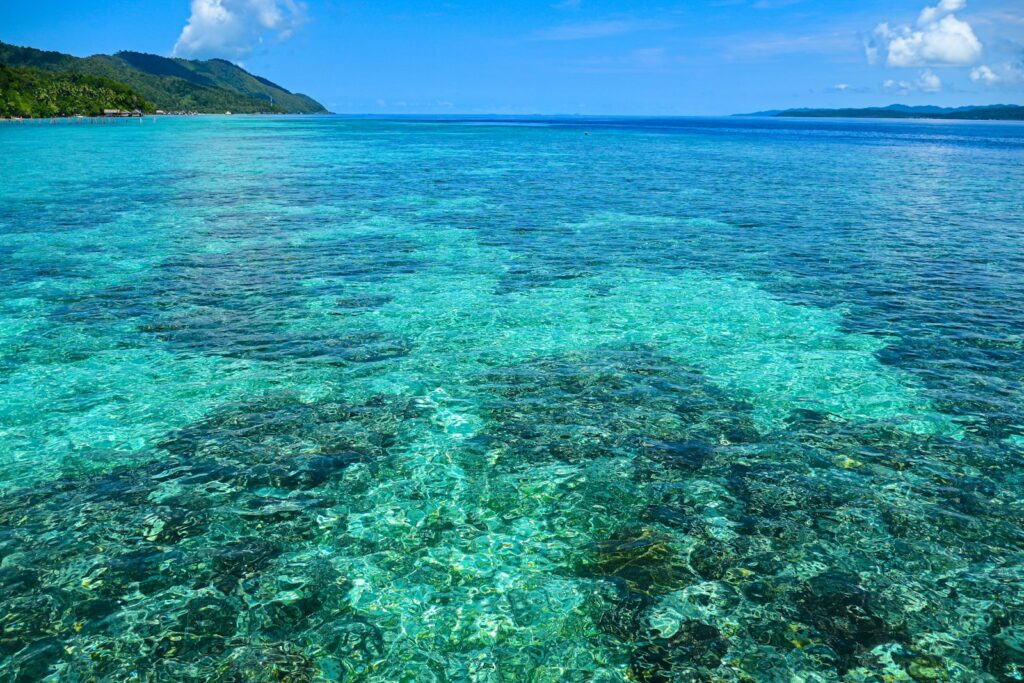
The best snorkeling spots in Komodo National Park are Karang Makassar (Manta Point), Siaba Besar, Kanawa Island, Pink Beach, Taka Makassar, and Kelor Island — six sites that cover the full day-trip circuit out of Labuan Bajo. What no operator page tells you is that those six spots range from truly beginner-friendly to genuinely dangerous for anyone who is not a confident swimmer, and current strength shifts with every tide. This guide grades each one honestly by skill level and current, so you know what you are heading into before you step off the boat.
By our Marine Life & Seasons Editor desk — snorkel-first coverage of Komodo NP since settling in Labuan Bajo. All site grades reflect qualitative field observation and multi-source documentation; no invented current speeds. Fee figures last verified June 2026 — confirm with your operator before travel.
How the Grading System Works
Every spot below gets three ratings:
- Skill level
- Beginner — comfortable floating in a life jacket, no active swimming needed at the right tide. Intermediate — can swim 50-100 m calmly, comfortable in moving water with a guide nearby. Advanced — strong confident swimmer, comfortable in active drift currents, reads guide signals instinctively.
- Current grade
- Calm — negligible drift at slack or incoming tide on sheltered bays. Moderate — noticeable but manageable drift; stay with the group. Strong — active drift that will carry you quickly; entry only on guide signal, weak swimmers should stay on deck.
- Tide dependency
- Whether the rating changes substantially between low and high tide, and what to do about it.
One thing to understand upfront: these are qualitative grades, not measured speeds. No public instrumented current data exists for these sites. Anyone who gives you precise knot figures is making them up. The grades below reflect consistent field observations across multiple sources and my own time in the water here.
The Six Core Snorkel Spots: Grades at a Glance
| Spot | Skill Level | Current Grade | Signature Wildlife | Tide-Sensitive? |
|---|---|---|---|---|
| Karang Makassar (Manta Point) | Intermediate+ | Strong | Manta rays | Yes — operators skip entry if too strong |
| Siaba Besar (Turtle City) | Beginner | Calm-Moderate | Green turtles | Mild — generally protected |
| Kanawa Island | Beginner | Calm | Coral gardens, reef fish | Minimal — naturally sheltered bay |
| Pink Beach (Pantai Merah) | Beginner (bay) / Advanced (off the point) | Calm in bay / Strong off the point | Coral, reef fish, occasional turtles | Yes — stay in the bay |
| Taka Makassar sandbar | Beginner (on bar) / Intermediate (edges) | Calm on bar / Moderate-Strong on edges | Reef fish, occasional manta flyovers | High — bar disappears at high tide |
| Kelor Island | Beginner-Intermediate | Moderate (lee side) / Strong (headlands) | Shallow fringing reef, fish | Moderate — best on incoming tide |
Karang Makassar — Manta Point
What it actually is
First, a reality check: Karang Makassar is not a coral garden. It is a long rubble-and-sand plateau sitting at roughly 5-15 m depth in the middle of a tidal channel. The bottom itself is unremarkable — scattered bommies and cleaning stations, not the lush reef the brochure photographs imply. What you are here for is what happens above and around that plateau: manta rays. On a good morning, mantas feed in the top 0-5 m of the water column, sometimes breaking the surface. From a snorkel, you can look straight down and watch a wingspan pass below you. That is genuinely remarkable and it genuinely requires no diving licence.
The cleaning stations where multiple mantas queue simultaneously sit at 8-15 m — you will see those clearly from above on calm, high-visibility days, but divers get the closer view. Manage expectations accordingly.
Current and skill grade
Skill: Intermediate+ | Current: Strong | Tide: Critical
The current at Karang Makassar is described consistently as strong across every documented source. This is a drift site: you enter up-current on the guide signal, float as a group, and the boat collects you at the far end. The protocol is straightforward if you trust your guide and stay calm. The hazard is separation — a swimmer who panics and starts fighting the current, or who drifts wide of the group, can end up a long way from the boat very quickly.
Reputable operators skip the water entry entirely when current or swell conditions are too strong. If your captain makes that call, it is good news: it means your operator is not cutting corners on safety. A skipped Manta Point is infinitely preferable to an unsafe one.
For weak swimmers and non-swimmers: life jacket is mandatory and a guide in the water is standard on reputable boats. If neither is offered, stay on deck. Some boats land non-swimmers at Taka Makassar sandbar while stronger swimmers drift Karang Makassar — ask your operator before booking if this matters to you.
Manta sightings: what to expect honestly
Mantas are present year-round in Komodo waters. Aggregations are typically strongest from roughly November through February when plankton concentrations peak, but sightings happen across the calendar. No operator or aggregator publishes verified encounter rates — any claim that implies a specific percentage chance is invented. You may see three mantas in 20 minutes; you may see none. That uncertainty is part of what makes the sighting mean something when it happens.
The manta code of conduct matters here: stay 3-4 m from the body, further from the tail, approach from the side, never from the front or directly behind. No touching, no chasing, no flash photography. Let the manta choose how close it comes. Mantas are fully protected under Indonesian law (KEPMEN-KP No. 4/2014), which made all Indonesian waters a manta sanctuary. Harassment is enforceable under fisheries law — this is not a polite suggestion.
Ready to plan your Manta Point visit around the tide? Plan your trip with our concierge — or reach us on WhatsApp for a quick answer on current conditions.
Siaba Besar — Turtle City
What it actually is
Siaba Besar earns its nickname. The shallow hard-coral reef here runs from roughly 2-6 m depth in a sheltered, protected bay, and green turtles are resident year-round at a density that makes multiple sightings per snorkel genuinely the norm. This is not an accident: the mix of seagrass, coral, and calm conditions suits turtles perfectly, and the protection inside Komodo National Park means they are habituated rather than skittish.
The coral quality is good — healthy hard-coral formations with reef fish, sea stars, and the occasional hawksbill passing through. For what you actually see from a snorkel, Siaba Besar consistently delivers more than Karang Makassar on any day that mantas choose not to show.
Current and skill grade
Skill: Beginner | Current: Calm-Moderate | Tide: Mild sensitivity
Siaba Besar is the top beginner site in the national park. The bay is naturally protected, the current is mild, and the shallow depth means you are never far above the reef. Children aged 6 and above typically handle it well with a parent alongside; the calm conditions also make it suitable for seniors and anyone who feels anxious in open water.
Even at Siaba, turtle etiquette applies: observe from a respectful distance, do not chase or block a surfacing turtle, and never reach down to touch. Green turtles are protected; beyond the law, stressed turtles habituate poorly and the site degrades for everyone.
Kanawa Island
What it actually is
Kanawa is a small island with a resort and one of the most accessible house reefs in the Labuan Bajo area. Beach entry takes you from a metre or two of water out to 5-8 m over live coral, and the site is genuinely sheltered enough to snorkel on days when other spots are marginal. Visibility runs well here — the protected bay position keeps sediment down even when conditions elsewhere are rougher.
The reef at Kanawa shows good coral cover and fish diversity, including the usual mix of parrotfish, wrasse, triggerfish, and the occasional reef shark in the deeper sections. It is not a headline manta or turtle site, but as a coral-garden snorkel it is one of the most consistent options on the day-trip circuit.
Current and skill grade
Skill: Beginner | Current: Calm | Tide: Minimal
Kanawa sheltered bay position makes current a non-issue for most conditions. This is where beginners who struggled at Karang Makassar typically exhale. The beach entry is easy, no drift protocol required, and you can go at your own pace. Children and non-swimmers in life jackets will be comfortable here.
Pink Beach — Pantai Merah
What it actually is
Pink Beach gets its colour from small fragments of pink-red carbonate material mixed into the white sand — the pigment comes primarily from foraminifera (single-celled organisms called Homotrema rubrum) and coralline algae rather than simply crushed coral, though you will hear the latter explanation from most boat guides. The mechanism is a minor detail; the effect on the beach is real and the colour is most visible when wet.
The snorkeling inside the semi-sheltered bay covers a fringing reef at varied depth. Coral condition is variable by micro-location — some sections have sustained anchoring damage over years of heavy visitation, others are healthy. Visibility tracks park-wide seasonality, roughly 10-25 m depending on season. You will see reef fish consistently; turtles appear occasionally.
The current hazard you need to know
Skill: Beginner (bay) / Advanced (off the point) | Current: Calm in bay / Strong off the point | Tide: Yes — stay in the bay
Pink Beach has a documented current hazard that almost no day-trip operator mentions in their marketing: the water around the headland and off the point runs strong. Snorkelers who drift or swim away from the sheltered bay and around the point can find themselves in a fast current with no easy return. This has caught experienced swimmers by surprise.
The rule is simple: stay inside the bay. The snorkeling there is perfectly good and the current is benign. The point looks inviting — better coral visibility, clearer water — but the current risk is real. If you see other snorkelers heading that way and your guide is not with you, do not follow.
Pink Beach also draws large crowds on the standard day-trip circuit, particularly in peak season (July-August). Plan your in-water time for early morning or late afternoon if the itinerary allows.
Taka Makassar — The Sandbar
What it actually is
Taka Makassar is a narrow white sandbar and cay that emerges at low tide in the middle of a shallow lagoon between Komodo and Rinca. At very low tide it is a striking above-water bar surrounded by turquoise water — the most-photographed stop on the day-trip circuit. As a snorkel spot, it is more nuanced.
The shallows directly on and around the bar (0.5-2 m) are calm and easy to explore at slack tide. Move toward the outer edges and the depth drops to the 5-10 m range, and the current strengthens considerably as the tide runs — you are at the edge of the tidal channel that feeds Karang Makassar. Occasional manta flyovers happen here, which is why some itineraries include it as a manta alternative when Karang Makassar conditions are too rough.
Current and skill grade
Skill: Beginner (on bar at slack) / Intermediate (edges on running tide) | Current: Calm on bar / Moderate-Strong on edges | Tide: High — bar submerges at high tide
Timing matters enormously at Taka Makassar. At slack water around low tide, the sandbar is accessible and the snorkeling on the immediate shallows is calm and manageable for beginners. At a running tide, the edges become fast water that can push you toward the manta channel. The bar itself also disappears at high tide, at which point the site becomes open water over the lagoon floor.
Day trips typically schedule Taka Makassar as the photo stop, not a primary snorkel stop. If you have limited snorkel time in your itinerary, prioritise Siaba Besar or Kanawa over Taka Makassar edges unless conditions are confirmed calm.
Kelor Island
What it actually is
Kelor is one of the less-documented spots on the circuit. It sits near a channel, and the fringing reef on the lee side offers shallow water from roughly 1-3 m near the beach. The island is better known for the short but steep hike to the ridge viewpoint — many day-trip guests spend more time on land here than in the water.
The reef at Kelor is modest. Coral coverage and fish diversity are reasonable on the sheltered side, but this is not a headline marine site. Documentation is genuinely thin: fewer independent snorkel-focused reports exist for Kelor than for any other site on the standard circuit, so these grades are conservative. What is consistent across sources is that the lee side at mild tide is calm enough for beginners, and the headland and channel side is not.
Current and skill grade
Skill: Beginner-Intermediate | Current: Moderate (lee side) / Strong (headlands) | Tide: Best on incoming, mild tide
Stay on the sheltered beach-entry side and Kelor is manageable for most snorkelers. Venture toward the headlands or into the channel current and conditions can turn quickly. The gradient here is steeper than it looks from the boat. If your guide leads you to the beach entry and keeps you on the sheltered side, you are in good hands. If conditions are anything but mild, treat this as a hill-hike stop rather than a snorkel stop.
What Snorkelers Actually See vs. What Only Divers Get
There is a persistent myth that snorkelers in Komodo are missing the real show. That is partly true and partly wrong, and the distinction matters for planning.
What snorkelers genuinely access at 0-5 m:
- Manta rays feeding at or near the surface at Karang Makassar — mantas feed in the top 0-5 m and occasionally break the surface
- Green turtles at 2-6 m at Siaba Besar, frequently and reliably
- Healthy coral gardens at Kanawa, Pink Beach bay, and Mawan edges at 1-5 m
- Diverse reef fish at every site — parrotfish, surgeonfish, triggerfish, angelfish, occasional hawksbill turtles
- Reef sharks in the shallower sections at several sites
What requires scuba diving:
- Batu Bolong wall action — the pelagic action happens at 15 m and deeper; the wall drops too fast for snorkelers to access meaningfully
- Castle Rock and Crystal Rock shark aggregations at 20-30 m
- Manta cleaning-station close-ups at 8-15 m depth (visible from above but not approachable)
- Southern Manta Alley encounters at depth
No licence or certification is needed to snorkel. Anyone can join a licensed operator snorkel trip. Diving requires at minimum an Open Water certification, and the advanced sites (Batu Bolong, Castle Rock, Crystal Rock) typically require an Advanced certification plus logged dives. A snorkel-first trip to Komodo is genuinely rewarding on its own terms and does not feel like a consolation prize.
Manta Code of Conduct at Karang Makassar
Manta rays have been fully protected under Indonesian law since 2014 — KEPMEN-KP No. 4/2014 designated all Indonesian waters (roughly 6 million km², the world largest manta sanctuary) as protected habitat. Harassment and capture are enforceable offences under fisheries law. Beyond the legal framework, the right way to behave around mantas:
- Keep at least 3-4 m from the manta body, and more from the tail — a tail strike is unlikely but worth avoiding
- Approach from the side, never head-on or from directly behind
- Stay flat at the surface; minimal fin movement; no splashing
- Let the manta come to you rather than chasing it
- Never touch, ride, or duck-dive into its path
- No flash photography; no selfie sticks in the water
- Never hover directly above or block a cleaning station
These are Manta Trust best-practice guidelines. The specific recommended distance (3-4 m from body) is operator SOP rather than a published legal specification — but it reflects the consensus standard among reputable operators globally. A manta that chooses to circle a calm, flat snorkeler is an unforgettable experience. A manta that gets chased and startled leaves. The protocol is its own reward.
Park Fees for Snorkelers — What You Actually Pay
Fee structures in Komodo NP changed under government regulation PP 36/2024 in late 2024, which triggered operator protests in Labuan Bajo in October that year. The below reflects the most consistent multi-source picture as of June 2026 — confirm current amounts with your operator before travel, as official tariff texts are not easily verified independently.
| Fee item | Foreigner (WNA) | Indonesian (WNI) | Notes |
|---|---|---|---|
| Park entrance (per person/day) | Rp 250,000 | Rp 50,000 weekday / Rp 75,000 Sunday-holiday | Multi-source high-confidence figure; not verified against official regulation text |
| Separate snorkel activity fee | None itemized as of June 2026 | None itemized as of June 2026 | Old Rp 15,000 fee was PP 12/2014 era — appears removed or bundled; confirm with operator |
| Diving surcharge | Rp 25,000 | Rp 25,000 | Snorkelers exempt — this is the snorkeler fee advantage over divers |
| Harbor fee | Rp 25,000 | Rp 25,000 | High confidence |
| Conservation fee | Rp 100,000 (reported) | Rp 10,000 (reported) | Contested — some 2026 sources include it, others omit it; confirm with your operator |
| Ranger fee (island landings only) | Rp 200,000/group up to 5 (Komodo/Rinca), Rp 150,000/group up to 5 (Padar) | Same | Applies only if landing on the island; snorkel-only trips with no landing may skip this |
| Drone permit | Rp 2,000,000/unit/day | Rp 2,000,000/unit/day | Single-source figure — confirm before bringing a drone |
What to budget as a foreign snorkeler: a minimum of Rp 275,000 (entrance plus harbor) is the floor. On a full itinerary including Padar trekking, Komodo dragons, snorkel stops, and ranger shares, operators commonly advise bringing Rp 400,000-550,000 in cash. Fees are almost always excluded from the day-trip price — your booking confirmation should specify this clearly.
The SiORA booking system (Sistem Informasi Online Reservasi Wisata Alam) became the official reservation platform in 2026, with walk-in ticket sales reportedly ended as of April 2026. Most operators handle pre-booking for you — confirm this when booking rather than arriving and assuming you can purchase at the gate. Last verified June 2026; confirm with your operator.
Tour Prices: What You Pay the Operator
These are the costs for boat, crew, and logistics — separate from park fees above. Prices shift with season and supply; figures below reflect the most consistent 2026 multi-source picture and should be treated as orientation ranges, not fixed tariffs.
| Boat type | Price range (per person) | Approx. USD | Notes |
|---|---|---|---|
| Shared speedboat, full day (standard 5-6 stop circuit) | Rp 1.4-1.6 million | ~USD 85-100 | Park fees excluded; full market span USD 60-150; peak Jul-Aug may push Rp 1.5-1.8M |
| Shared slow/wooden boat, full day | Rp 900k-1.3 million | ~USD 55-80 | Fewer stops, longer transit; more prone to seasickness on swell days |
| Private speedboat charter (2-6 pax) | Rp 6-10 million/boat/day | ~USD 370-620/boat | Your itinerary, your tide timing — worth it for families or groups of 4+ |
| Private premium/larger vessel | Rp 10-18.5 million/boat/day | ~USD 620-1,150/boat | Wide variance; confirm inclusions carefully |
Typical inclusions: hotel pickup, lunch, water, mask and snorkel (fins sometimes included, sometimes not — ask before booking). What is almost universally excluded: park and ranger fees (bring cash), towels, tips, and travel insurance. Last verified June 2026.
Want help matching boat type and itinerary to your group skill levels? Plan your trip and describe your group — we will help you find the right format.
Seasonal Conditions by Month
Visibility and current in Komodo shift meaningfully through the year. The ranges below come primarily from resort climatology documentation and should be read as typical reported figures rather than guarantees — local conditions can vary considerably from these baselines. Last verified June 2026.
| Month | Visibility (typical reported) | Water temp (central park) | Conditions notes |
|---|---|---|---|
| Jan-Feb | 10-15 m | 28-29°C | West monsoon: seas rough, cancellations possible, harbor closures at short notice. Manta aggregations often strongest. Buffer extra days if traveling this period. |
| Mar | 15-20 m | 28-29°C | Transition season, improving conditions |
| Apr-May | 20-30 m | 28-29°C | Dry season begins; May often best visibility of the year |
| Jun | 20-25 m | 27°C | Good conditions, water beginning to cool |
| Jul-Sep | 15-25 m | 25-26°C central / approx. 22-25°C southern sites | Peak tourist season; shorty wetsuit worth it for long sessions; southern sites significantly cooler from Indian Ocean upwelling |
| Oct | 20-25 m | 26°C | Conditions remain good; crowds thinning |
| Nov-Dec | Variable | Warming | Wet season approaching; manta aggregation building toward peak |
A note on south-park sites: Mawan and sites closer to the Indian Ocean side run several degrees cooler than the central park figures above, particularly July through September. If you are sensitive to cold water, a 2-3 mm shorty wetsuit is worth packing for those months. At 25-26°C it is not unpleasant for a short snorkel, but a 90-minute drift session can chill you more than you expect.
Gear Realities: What the Boats Carry vs. What to Bring
Mask and snorkel are included on nearly all day tours. Fins are sometimes included, sometimes not — check when booking. Beyond those basics, there is a significant quality gap between what different operators carry.
Budget shared boats commonly carry scratched masks with worn silicone skirts that seal poorly on anything except the exact face shape they were last used on. A mask that leaks slightly in a calm bay becomes a real distraction at Karang Makassar when you are already managing drift. Bringing your own mask is the single most effective gear decision you can make. It does not need to be expensive — a well-fitting mask from any dive shop outperforms a worn rental in current.
Children mask and fin sizing: available and reliable on dive-centre-run boats, not guaranteed on budget options. If you are bringing children, bring child-sized masks. Bring your own child PFD (personal flotation device) as well — Indonesian law requires life jackets for all passengers and crews do provide them, but fit for small children on budget boats is unreliable. A properly-fitted PFD for your child weighs almost nothing and removes the biggest practical anxiety of a family snorkel trip.
Prescription masks: some established Labuan Bajo dive shops stock common diopter lenses. No day boat carries them. Plan ahead.
Thermal: a rashguard and leggings are sufficient at 28-29°C for most people. In July-September, at 25-26°C (and cooler at southern sites), a shorty wetsuit is worth it for extended sessions. You can rent one in Labuan Bajo but availability of sizes is not guaranteed — bring your own if you know you run cold.
Sunscreen: there is no legal ban on chemical sunscreen in Komodo NP or Indonesian waters as of June 2026 — unlike Hawaii and Palau, Indonesia has not enacted that restriction. Mineral sunscreen (zinc oxide, titanium dioxide) is strongly recommended as best practice for reef-adjacent snorkeling. You can find it in Labuan Bajo but selection is limited and prices are higher than at home — bring an adequate supply.
Questions to Ask Your Operator Before You Board
Not all operators are equal. These questions separate the safety-conscious from the corner-cutters:
- Will a guide enter the water with the group at Karang Makassar?
- What is the policy if current is too strong for a safe entry — do you skip that stop?
- Are life jackets available in children sizes that actually fit?
- Are fins included, or just mask and snorkel?
- How many snorkel stops does the itinerary include, and approximately how long at each?
- Does the boat handle the SiORA park ticket reservation, or do guests need to do it themselves?
- What is the maximum group size on this trip?
An operator who answers these questions directly and specifically is worth more than one who promises the best experience without specifics. If you are unsure which operator to book with, our planning form can help you match to an appropriate option for your group size and skill level.
Frequently Asked Questions
Can I see manta rays snorkeling, or do I need to dive?
Yes — manta rays are genuinely visible from the surface at Karang Makassar (Manta Point). Mantas feed in the top 0-5 m of the water column and sometimes break the surface on calm mornings. No diving licence required. The cleaning stations where multiple mantas congregate sit at 8-15 m, which divers can approach more closely, but snorkelers floating above can still see them clearly on high-visibility days. Manta sightings are possible year-round but no operator can guarantee them — encounter rates are not publicly documented anywhere.
Which spots are safe for beginners or non-swimmers?
Siaba Besar and Kanawa Island are the most beginner-friendly sites on the standard day-trip circuit — calm protected water, good visibility, manageable depth. Taka Makassar sandbar at slack tide is also easy. Pink Beach bay (not off the point) works for beginners in calm conditions. Karang Makassar and Mawan are not suitable for non-swimmers without a life jacket and guide in the water; reputable operators typically require this. Ask your operator explicitly about life-jacket policy and guide-in-water practice before booking.
What are the park fees for snorkelers in 2026?
The most consistent 2026 multi-source figure for foreign visitors is Rp 250,000 per person per day for park entrance, plus Rp 25,000 harbor fee — a minimum of Rp 275,000. A contested conservation fee of Rp 100,000 is reported by some sources and omitted by others; confirm with your operator. Indonesian citizens pay significantly less: Rp 50,000 weekday or Rp 75,000 Sunday/holiday entrance. Snorkelers are exempt from the diving surcharge (Rp 25,000). If your itinerary includes island landings with a ranger, add Rp 150,000-200,000 per group. On a full Padar-plus-dragons-plus-snorkel day, bring Rp 400,000-550,000 cash. These fees are almost always excluded from the day-trip ticket price. Last verified June 2026 — confirm with your operator.
Is Pink Beach safe to snorkel?
Inside the bay, yes — Pink Beach is a calm, beginner-suitable snorkel with a reasonable fringing reef. The hazard is specific: the water around the headland and off the point runs a strong current that has caught experienced swimmers off guard. Stay inside the sheltered bay, follow your guide lead, and Pink Beach is a straightforward stop. If you see other snorkelers drifting toward the point without a guide escort, do not follow.
How much snorkeling time do you actually get on a standard day trip?
This varies significantly by operator and itinerary. A standard 5-6 stop day trip typically allocates significant time to Padar trekking and Komodo dragon viewing alongside snorkeling. In practice, many shared day trips include two or three genuine snorkel stops with perhaps 30-60 minutes in the water per stop — exact timing depends on current conditions, how long the group spends hiking, and transit time between spots. If maximizing in-water time is your priority, ask operators specifically how many snorkel stops they include and whether the boat is snorkel-first or a combined trek-and-snorkel run. A private charter gives you control over itinerary and timing that a shared boat cannot.
If you have questions about any of the spots covered here, or want help building an itinerary around your group skill levels and interests, use our planning form or message us on WhatsApp — we are happy to help you think it through. No one can pay to change what we publish; if you use our free planning help and proceed with a partner operator, they may pay us a referral fee at no extra cost to you.