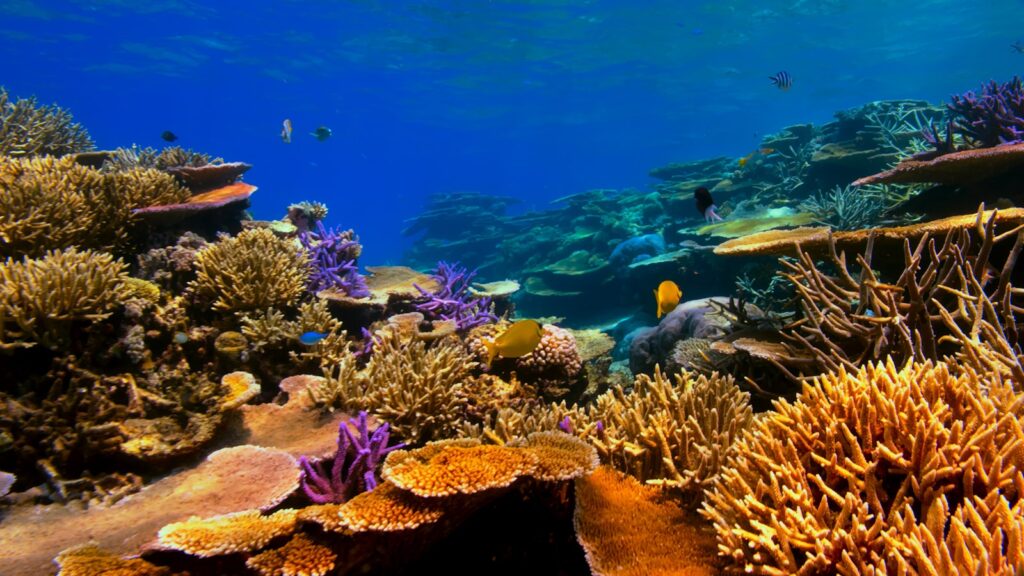
Komodo snorkeling is genuinely worth it without diving — but only if you go in with honest expectations. Manta rays feed in the top 0–5 metres of the water column at Karang Makassar, green turtles graze the hard-coral reef at Siaba Besar in 2–6 metres, and healthy coral gardens at Kanawa and Pink Beach start at one metre deep. No dive certification needed. You can see all of that from the surface. What you cannot see from a mask and snorkel: the wall action at Batu Bolong below 15 metres, the pelagic shark and trevally schools at Castle Rock and Crystal Rock at 20–30 metres, and the manta cleaning stations at 8–15 metres that divers hover over at close range. That is the honest trade-off. This page works through both sides of it so you can decide with real information rather than sales copy.
What Snorkelers Actually See at the Signature Sites
Four spots in the Komodo National Park deliver something you cannot replicate at most other destinations — and you do not need a tank for any of them.
Karang Makassar (Manta Point) — The One Everyone Asks About
Yes, snorkelers see manta rays here. The reef itself is a long rubble-and-sand plateau sitting at roughly 5–15 metres, not a shallow coral garden — there are scattered bommies and cleaning stations, but the visual drama is the mantas themselves moving up into the plankton-rich surface layer. On calm mornings they break the surface to feed. You float above open water watching them pass below and occasionally beside you. It is unlike anything else.
Two honest caveats. First, no one can guarantee a sighting — encounter rates are not published anywhere and vary with conditions, tides, and season. Manta aggregations are strongest roughly November to February when plankton density peaks, but mantas are present year-round including the June–August dry-season peak. Second, Karang Makassar is a drift site with currents widely described as strong — estimated 1–3 km/h on a running tide, though no instrumented speed data exists for the site. Weak swimmers should enter only with a life jacket and a guide in the water beside them; operators sometimes skip entry entirely when the current runs too fast on the day. That is not a failure. That is a good operator making the right call.
Siaba Besar — The Turtle Reef
If Manta Point is the headline act, Siaba Besar is the one that reliably delivers. The shallow protected hard-coral reef runs its main band at 2–6 metres with mild, protected current. Multiple green turtles per snorkel session is the norm — not guaranteed, but genuinely typical. Beginners, non-swimmers with a vest, and families with older children are comfortable here. It is the strongest argument for Komodo as a snorkeler’s destination in its own right, separate from any manta promise.
Kanawa and Pink Beach — The Coral Gardens
Kanawa has beach-entry house reef from roughly 1–2 metres sloping to 5–8 metres, rated mild to protected for current, and very good visibility. It is one of the most beginner-friendly sites in the park — you are in shallow water over live coral from the moment you step off the beach ladder.
Pink Beach (Pantai Merah) lets you snorkel right off the beach in a semi-sheltered bay. Reef condition varies by micro-location — anchoring has damaged some sections, and there is no hard coral-cover data for the site — but the accessible shallows are worth an hour in the water. The pink sand itself comes from red carbonate fragments; the colouration traces to organisms including Homotrema rubrum rather than, as tour literature often claims, simply crushed red coral. Minor point, but it is the kind of thing you notice when you have snorkelled the place a few hundred times.
Taka Makassar — Tide-Dependent
The sandbar at Taka Makassar is photogenic and easy on the bar itself at slack tide — immediate shallows of 0.5–2 metres. The edges, though, drift toward the manta channel and become hazardous on a running tide. Most day trips treat it as a photo stop and a brief shallow paddle, not a serious snorkel site. Know that before you build your expectations around it.
What You Give Up Without a Tank
This is the section most operator pages skip. It matters.
The sites that built Komodo’s global reputation among underwater photographers — Batu Bolong, Castle Rock, Crystal Rock — are effectively diver-only. Batu Bolong’s wall starts at the surface but the action is below 15 metres, and the current is too strong for surface snorkeling on most tides. Castle Rock and Crystal Rock require Advanced Open Water certification and significant logged dives; the pelagic schools of trevally, sharks, and barracuda that appear in every Komodo photography feature live at 20–30 metres. Snorkeling over those sites from the surface gives you open water and maybe a reef shark shadow. It does not give you what is in the photographs.
Manta cleaning stations at 8–15 metres are the other honest loss. Divers can sink to a cleaning station and spend 10–15 minutes watching mantas hold position while cleaner wrasse work their gill plates. Snorkelers watch from above. It is still moving. It is not the same experience.
For a full side-by-side comparison of access, certification requirements, and depth, see our snorkeling vs. diving Komodo guide.
The Honest Skill-Grade by Site
Every spot in the park has its own current character. This table uses the grades from our spots hub — built from on-site observation, not copied from operator brochures.
| Site | Depth (main band) | Current grade | Minimum skill level | Signature sighting |
|---|---|---|---|---|
| Siaba Besar | 2–6 m | Mild / protected | Beginner (vest OK) | Green turtles |
| Kanawa | 1–8 m | Mild / protected | Beginner | Coral gardens, reef fish |
| Taka Makassar (bar) | 0.5–2 m (bar) | Mild at slack tide; hazardous edges on running tide | Beginner — bar only, slack tide | Sandbar photo stop |
| Pink Beach | 1–5 m (bay) | Semi-sheltered; variable by micro-location | Beginner to intermediate | Coral, coloured sand |
| Karang Makassar (Manta Point) | Open water surface | Strong drift — tide-dependent | Intermediate+; vest + guide-in-water for weak swimmers | Manta rays |
| Mawan | 3–8 m sloping | Strong | Confident swimmers, guided only | Mantas, hawksbill turtles, reef sharks |
A note on Mawan: it occasionally delivers manta encounters and more consistently shows hawksbill turtles and reef sharks on the slope. Current is strong, typically strongest on the rising tide when mantas are most active. This is not a site for anyone uncertain in the water.
Park Fees — What Snorkelers Actually Pay
Fees changed significantly in late 2024 under the new KLHK tariff framework (PP 36/2024), and the change triggered operator protests in Labuan Bajo. The structure below reflects the most consistent multi-source figures as of June 2026 — confirm exact amounts with your operator before departure, as no official annex text has been independently verified.
- Foreigner entrance fee
- Rp 250,000 per person per day (applies equally to snorkelers, trekkers, and divers)
- Domestic entrance fee
- Rp 50,000 weekday / Rp 75,000 Sunday and public holidays
- Snorkeling activity surcharge
- None currently itemized — as of June 2026, snorkelers pay base entry only. The old Rp 15,000 snorkel fee is a historical artefact from PP 12/2014.
- Diving surcharge
- Rp 25,000 per diver per day — snorkelers are exempt
- Harbor fee
- Rp 25,000 per person
- Conservation fee
- Rp 100,000 per foreigner — reported by some 2026 sources, omitted by others; contested, flag as unconfirmed
- Ranger / naturalist fee (island landing only)
- Rp 200,000 per group of up to 5 (Komodo or Rinca island); Rp 150,000 per group (Padar). Snorkel-only trips with no island landing may skip these.
Realistic cash to carry for a foreigner on a full Padar + dragons + snorkel day: Rp 400,000–550,000. Park fees are almost always excluded from the boat price — bring cash, as card payment is not typical at entry points. Booking now runs through the SiORA platform (Sistem Informasi Online Reservasi Wisata Alam), reportedly mandatory since April 2026. Most operators handle the reservation for you; confirm this when you book. Last verified June 2026 — fees are subject to change, confirm with your operator.
Tour Prices — Honest Ranges for 2026
There is no fixed tariff for Labuan Bajo day tours. Prices vary by boat type, group size, season, and what is included. The figures below are synthesized from available June 2026 market data; treat them as planning brackets, not quotes.
Shared speedboat full-day (standard circuit — Padar, Komodo or Rinca, Pink Beach, Manta Point, Taka Makassar): Rp 1.4–1.6 million per person, roughly USD 85–100. Full market span runs USD 60–150; peak season (July–August) tends toward the upper end as cheap seats sell out. Park fees excluded.
Shared slow / wooden boat day trip: approximately Rp 900,000–1.3 million per person (USD 55–80). Fewer stops, longer transit time, and potentially more seasickness exposure on open-water crossings. Some travellers prefer them; most snorkelers who want maximum time in the water do not.
Private speedboat charter: Rp 6–10 million per day for small boats (2–6 passengers); Rp 10–18.5 million for larger or premium vessels. Split among a family or small group, private charter buys you a flexible itinerary, unhurried stops, and the ability to skip sites when conditions are poor — the clearest upgrade path for snorkelers who want to optimize water time.
Typical inclusions: hotel pickup, lunch, water, basic mask and snorkel. Fins are not guaranteed on every shared boat — ask before you book. Park and ranger fees are almost universally excluded and paid in cash on the day.
Ready to figure out which boat type suits your group and skill level? Plan your trip with our free concierge — share your dates, group size, and swimming comfort level over WhatsApp or via the planning form, and we will match you with options that actually fit. No one can pay to change what we publish; if you proceed with an operator partner, they may pay us a referral fee at no extra cost to you.
Gear Reality — What the Boat Provides vs. What to Bring
Nearly every day tour includes mask and snorkel at no extra charge. Fins are sometimes included, sometimes available for hire, sometimes absent — clarify this in advance. Quality on budget shared boats ranges from serviceable to genuinely poor: scratched lenses, tired silicone straps, mismatched fin sizes. A scratched mask leaks light in unpredictable ways and reduces contrast underwater. It does not ruin a trip, but it blunts it.
The single most effective piece of gear to bring from home is your own mask. A mask that seals correctly to your face in calm water at home will seal in current. A rental mask that does not seal at the dock will not seal at Manta Point. If you invest in one thing before this trip, that is it.
For thermal protection: a rashguard and leggings cover you adequately in water that runs 28–29°C from January through May and 26–27°C in June. July through September the water drops to 25–26°C in the central park — a shorty 2–3mm wetsuit pays for itself on a full day in the water or if you are sensitive to cold. Southern park sites near the Indian Ocean upwelling run several degrees cooler still, sometimes reported around 22–25°C.
Sunscreen: mineral, reef-safe formulations are strongly recommended and are becoming easier to find in Labuan Bajo. There is no legal ban on oxybenzone or octinoxate in Indonesian waters as of June 2026 — unlike Hawaii or Palau — but the coral degradation case for reef-safe product is well established. Bring enough from home; options in town are improving but limited.
Safety — What the Current Means in Practice
Currents are the documented hazard in the Komodo National Park. Indonesian law requires life jackets on all passengers; day boats carry flotation, though often basic foam vests rather than SOLAS-grade. If you are a weak swimmer or nervous in the water, tell your operator before departure — not at the entry point. Good operators put guides in the water with non-swimmers at current-prone sites; this is standard practice on reputable boats but not a park-wide enforced requirement, so ask directly when booking.
The drift protocol at Karang Makassar matters: you enter up-current on the guide’s signal, drift as a tight group, do not fight the current, and the boat shadows you down-current for collection at the end. If you are separated, the universal signal is to float calmly with one arm raised. Operators who skip the entry when conditions are wrong are doing their job correctly — do not pressure them to proceed.
Manta Etiquette — The Non-Negotiables
Manta rays in Indonesian waters are legally protected under KEPMEN-KP No. 4/2014, which made the entire Indonesian Exclusive Economic Zone — approximately six million square kilometres — a manta sanctuary. Harassment and capture are enforceable under fisheries law.
The Manta Trust-aligned code of conduct that guides operate on at Karang Makassar:
- Maintain at least 3–4 metres from the body, 4–5 metres from the tail (best practice; not codified in Indonesian law, but the standard responsible operators observe)
- Approach from the side — never head-on, never from behind; stay flat at the surface and minimize fin movement
- Let the manta come to you; do not chase, do not duck-dive into its path, do not position yourself above or blocking a cleaning station
- No touching — the mucus layer that protects the skin is damaged by contact
- No flash photography
- Boats hold engine-neutral or idle well off visible mantas while swimmers are in the water
Following this code is not just ethics. Mantas that feel pursued stop coming to the surface. The operators who enforce it are protecting your encounter probability, not just the animals.
The Verdict
Komodo snorkeling without diving is worth it for almost every traveller who makes the trip — but the value comes from specific sites, not from the park as a whole. Siaba Besar and Kanawa are exceptional by any standard. A Karang Makassar manta encounter from the surface is genuinely memorable. What you will not have is access to the 15–30 metre diver experience that appears in every professional Komodo photograph.
If you are on the fence about learning to dive before this trip, our snorkeling vs. diving pillar walks through the access, cost, and time investment of that decision. If you are committed to snorkeling and want to make the most of the sites that are actually yours at the surface, the spot grades above are the honest map.
To work through dates, group size, and the right boat type for your swimming level, plan your trip with our free concierge or reach us on WhatsApp — we help you build an itinerary around the sites that suit you, not the ones that look best in a sales deck.
Frequently Asked Questions
Can you see manta rays snorkeling in Komodo, or only diving?
You can see manta rays snorkeling at Karang Makassar (Manta Point). Mantas feed in the top 0–5 metres of the water column and are regularly visible from the surface, particularly on calm mornings. Divers get access to cleaning stations at 8–15 metres where mantas hold position for longer, which is a different and closer experience — but snorkelers see them too. No sighting is ever guaranteed.
What is the best snorkeling site in Komodo for non-divers and beginners?
Siaba Besar is the top pick. The hard-coral reef sits at 2–6 metres with mild, protected current, multiple green turtles per session is genuinely typical, and the site is comfortable for weak swimmers with a life jacket. Kanawa runs close behind — beach-entry, shallow, calm, and one of the best coral gardens in the park for visibility.
Do I need to pay a separate snorkeling fee at Komodo National Park?
As of June 2026, no separate snorkeling activity fee appears in the park fee structure for snorkelers — you pay the standard entrance fee of Rp 250,000 per day (foreigner) plus a harbor fee of Rp 25,000. Divers pay an additional Rp 25,000 surcharge that snorkelers are exempt from. A conservation fee of Rp 100,000 is reported by some sources but contested by others. Bring Rp 400,000–550,000 cash for a full itinerary day including ranger fees. Fees are subject to change; confirm with your operator before departure. Last verified June 2026.
Is Komodo snorkeling safe for weak swimmers and non-swimmers?
Several sites are safe and genuinely rewarding for weak swimmers with proper equipment and a good operator. Siaba Besar and Kanawa are the right picks — both have mild current and can be done with a life jacket. Karang Makassar and Mawan are not appropriate for weak swimmers without a guide in the water. Tell your operator your swimming ability before boarding, confirm that life jackets are provided and fitted, and ask whether a guide enters the water at current-prone sites. The honest answer is that the site choice matters enormously.
What does Komodo snorkeling give up compared to diving — honestly?
You give up three things. First, the famous advanced dive sites — Batu Bolong, Castle Rock, Crystal Rock — where the pelagic action (shark schools, large trevally, barracuda) happens at 15–30 metres. Second, close views of manta cleaning stations at 8–15 metres. Third, the general depth range below about 8 metres where reef structure and fish density increase substantially. What snorkelers keep: mantas at the surface, turtles in 2–6 metres at Siaba Besar, healthy coral gardens at 1–5 metres at Kanawa and Pink Beach, and occasional shallow reef sharks. Whether that trade-off is worth it depends entirely on your expectations going in.