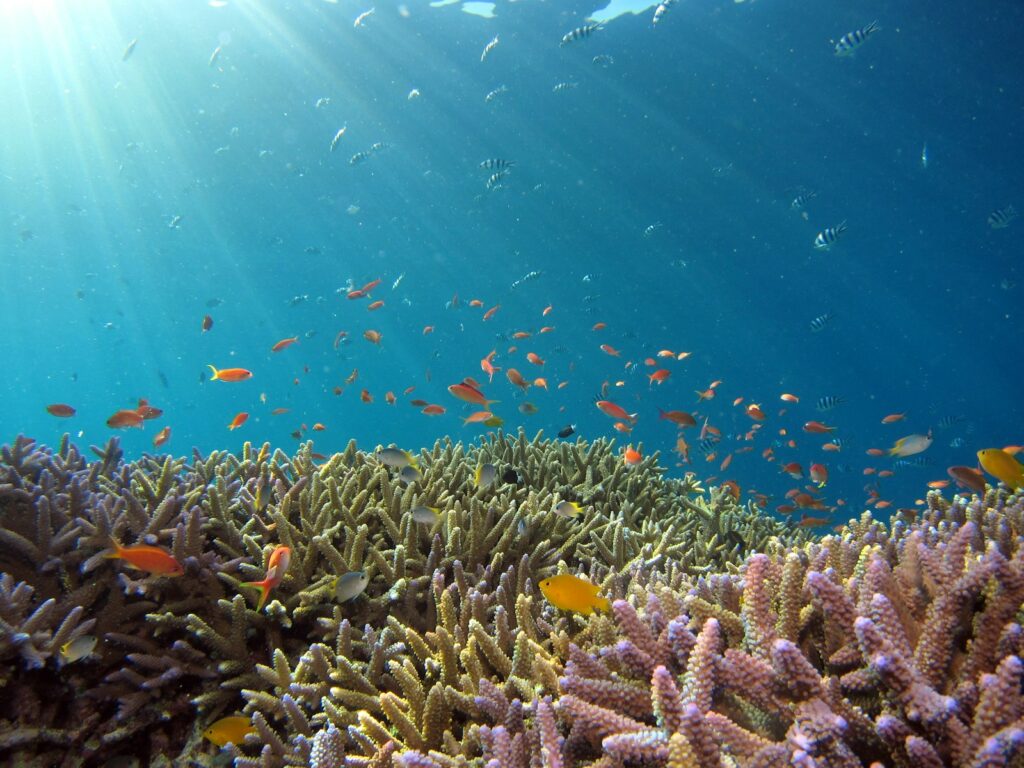
Snorkeling vs diving in Komodo comes down to one honest fact: snorkelers in Komodo National Park see genuinely world-class marine life without a certification, a regulator, or a single dive. You do not need scuba to see manta rays gliding below you at Karang Makassar, green turtles rising through 3 metres of clear water at Siaba Besar, or coral gardens dense with clownfish and parrotfish at Kanawa. What divers get that snorkelers do not is depth — the Batu Bolong wall below 15 metres, the pelagic sharks circling Castle Rock and Crystal Rock at 20–30 metres, and the cleaning-station close-ups where mantas hover motionless at 8–15 metres. That is the full picture. Everything below is the detail you need to make the call.
No Licence, No Problem: The Case for Snorkeling First
Diving in Komodo requires at minimum a PADI Open Water certification. The premium sites — Castle Rock, Crystal Rock, Batu Bolong — often demand Advanced Open Water plus a log of recent dives. Getting certified takes three to four days and real money. Snorkeling takes none of that. You show up, you get in the water.
That matters more here than almost anywhere else, because Komodo’s surface zone is not a consolation prize. The park sits at the junction of the Indian Ocean and the Flores Sea, which drives nutrient-rich cold upwellings into shallow water. That nutrient column is exactly what draws manta rays to feed at depths of 0–5 metres — often breaking the surface on calm mornings. Snorkelers access that same zone without any qualification. Divers are not closer to the feeding mantas; they are just closer to the cleaning stations further down, where mantas stop to have parasites removed at 8–15 metres. Both experiences are real. They are different, not better and worse.
My honest answer to “should I learn to dive before I come to Komodo?” is: no. Come now, snorkel the sites that reward surface observers, and decide whether you want to pursue diving after you have seen what the reef looks like from above. Plenty of guests have stood on the back of the boat at Karang Makassar watching a reef manta arc through the top metre of water and concluded, correctly, that they did not need scuba to feel they had been somewhere extraordinary.
What Snorkelers Actually See: The Surface Zone Delivered
Manta Rays at Karang Makassar (Manta Point)
Karang Makassar is the site most people associate with Komodo mantas, and snorkelers genuinely see them here — no caveats about visibility or depth required. The site is a long rubble-and-sand plateau sitting at roughly 5–15 metres, and reef mantas feed in the top 0–5 metres where plankton concentrates. On a calm, low-current morning you will sometimes watch a manta’s wingtips cut the surface five metres in front of you.
What snorkelers miss compared to divers: the cleaning stations. These are specific bommies at 8–15 metres where mantas hover stationary while small wrasse clean parasites from their gills and skin. Divers descend and watch that up close. Snorkelers float above and see the same animal in motion. Neither view is false. The cleaning-station close-up is quieter and more prolonged; the surface sighting is often more dramatic — a large animal crossing just below you in open blue water.
Important context: no operator, no guide, and no park authority publishes encounter-rate percentages for Karang Makassar. Anyone who guarantees a manta sighting is not being straight with you. Mantas are present year-round; aggregations are reported to peak roughly November through February when plankton blooms are strongest (last verified June 2026 — sources vary on this, and mantas do show consistently through the dry season too). Snorkeling Karang Makassar is an intermediate site minimum. The current runs strong — estimated 1–3 km/h on a running tide, sometimes more — and the drift protocol requires confidence in the water. Operators will skip the entry entirely when conditions are unsafe, which is the right call.
Green Turtles at Siaba Besar
Siaba Besar is frequently called Turtle City, and it earns that. The shallow protected hard-coral reef runs from about 2–6 metres, the current is mild to protected, and multiple green turtles per snorkel session is the norm rather than the exception. This is the top beginner site in the park. You do not need to free-dive to see turtles here; they come up to breathe and cruise the shallow reef at depths where a snorkeler floating on the surface has clear, unobstructed sightlines.
Divers get nothing additional here. The reef does not deepen into anything special. Siaba Besar is genuinely a snorkeler’s site, and an accessible one.
Coral Gardens at Kanawa and Pink Beach
Kanawa’s house reef starts at 1–2 metres off the beach and runs to 5–8 metres at the edges. Current is mild and the bay is reasonably sheltered. This is the most beginner-friendly major site in the park — good for families, strong non-divers, and anyone who wants time to drift slowly over coral without managing a current. Visibility is generally good. You will see reef fish, clownfish in anemones, occasional turtles, and healthy hard-coral formations within snorkel reach.
Pink Beach (Pantai Merah) sits in a semi-sheltered bay with beach entry. The coral condition varies by micro-location — anchor damage has affected some sections, though the site remains photogenic and the shallow reef is intact in the better-positioned spots. Visibility tracks park-wide seasonality, typically reported at 10–25 metres depending on the month (those ranges are drawn from resort climatology records and should be treated as typical, not guaranteed — last verified June 2026). The pink tint of the sand comes from foraminifera and coralline algae fragments mixed into the carbonate sediment, not from coral rubble as some tour literature claims.
Reef Sharks and Mixed Life at Mawan
Mawan runs coral at roughly 3–8 metres sloping to a sandy flat that serves as a manta flyover channel. Snorkelers here can see hawksbill turtles, reef sharks cruising the sand, and manta rays on the right tide. However: the current at Mawan is strong. This is a guided-experienced-snorkelers-only site. Not suitable for children, non-swimmers, or anyone uncertain in moving water. For confident snorkelers willing to follow guide instructions precisely, Mawan is one of the most rewarding surface sessions in the park.
What Only Divers Get: The Honest List
The dive sites below the surface are genuinely different, and it is worth naming them plainly rather than glossing over what snorkelers miss. This is not an argument for snorkeling being inferior — it is just the map.
Batu Bolong
Batu Bolong is a sea mount with a wall that drops steeply from about 15 metres. The wall is covered in hard and soft corals and hosts large schools of fish, Napoleon wrasse, and regular shark sightings. The surface above Batu Bolong is exposed to serious current — the site is considered unsafe for snorkelers, and operators typically prohibit surface swimming here. Divers access the wall via controlled descent with a guide. Snorkelers remain on the boat at Batu Bolong. This is one of the most celebrated dive sites in Southeast Asia; it is not a snorkel site.
Castle Rock and Crystal Rock
Both sites are in the north of the park. They sit in open channel water with strong, highly variable current. Pelagic species — grey reef sharks, white-tip sharks, schools of big-eye trevally, occasional hammerheads — aggregate at 20–30 metres around these seamounts. Advanced dive certification with logged recent dives is typically required by responsible operators. These sites are off-limits for snorkelers both by operator policy and by common sense: the current makes surface swimming dangerous, and the marine life worth seeing is far below snorkeling depth.
Manta Alley Cleaning Stations (South Park)
The southern section of Komodo National Park, around Padar and the Rinca channel approaches, holds a separate manta aggregation zone sometimes called Manta Alley. The cleaning stations here sit deeper than those at Karang Makassar and the water temperature runs several degrees cooler — estimated 22–25°C from Indian Ocean upwelling versus 27–29°C in the central park (these are approximate ranges, not precise measurements). The colder, cleaner water and deeper cleaning activity make this primarily a dive experience. Snorkelers visiting on a day trip do not typically reach the southern sites.
Cost Comparison: Snorkeling vs Diving in Komodo
| Option | Typical Cost (from Labuan Bajo) | Park Fees (extra, cash) | Certification Required |
|---|---|---|---|
| Shared speedboat day trip (snorkeling) | Rp 1.4–1.6M pp (~USD 85–100) | Rp 275,000–375,000 foreigner minimum | None |
| Shared slow boat day trip (snorkeling) | Rp 900k–1.3M pp (~USD 55–80) | Same as above | None |
| Private charter (2–6 pax, snorkeling) | Rp 6–10M/day total boat | Same per person | None |
| Shared liveaboard 2D1N (snorkeling or diving) | USD 170–250 pp | ~Rp 650k/3D2N trip (reported, flag) | None for snorkeling; OW cert for diving |
| Dive surcharge (park fee only) | Rp 25,000/diver/day extra | n/a — this IS the park fee line | PADI Open Water minimum |
All prices last verified June 2026 — volatile; confirm with your operator before booking. Park fees are almost always excluded from day-trip prices. Bring Rp 400,000–550,000 cash per person for a full Padar-dragons-snorkel itinerary that includes ranger fees and the harbor fee. The Rp 25,000 diving surcharge is the only fee differential for snorkelers versus divers; the base entry fee is Rp 250,000/foreigner/day regardless of activity (no separate snorkeling surcharge has been itemized in 2026 fee tables — the old Rp 15,000 snorkel fee was a PP 12/2014-era item).
The real cost gap between snorkeling and diving is not the park surcharge — it is the equipment and, if you do not yet have a certification, the course. Snorkel gear is included on most day tours (mask and snorkel; fins are not guaranteed on budget boats — confirm in advance). Dive equipment hire on a local boat runs USD 25–40/day on top of the boat price. A PADI Open Water course in Labuan Bajo was running approximately USD 350–450 in 2026 (operator-dependent; verify before booking). For a first visit, snorkeling is dramatically cheaper, zero-barrier, and — as described above — genuinely rewarding.
Ready to plan which sites fit your group? Plan your trip with our concierge, or reach us directly on WhatsApp for a same-day response on availability and current conditions.
Mixed Groups: When Half Your Boat Wants to Dive
This is a real logistics question. Many Labuan Bajo boats run mixed dive-and-snorkel tours where certified divers descend and snorkelers stay on or near the surface with a guide-in-water or life jackets and a surface marker. This works well at sites like Karang Makassar, Kanawa, and Pink Beach, where the surface experience is genuinely good. It works less well at dive-only sites like Batu Bolong, where snorkelers are sitting on the boat for 45–60 minutes while divers are underwater. If your group is mixed, ask the operator specifically which stops are surface-viable for the non-divers, and how much in-water time snorkelers actually get versus boat time at dive-only stops.
A snorkeling-dedicated tour — rather than a shared dive-and-snorkel boat — will maximize your in-water minutes and route you toward spots where the surface zone pays off. The itinerary design is different. Siaba Besar, Kanawa, Taka Makassar bar, Mawan (on the right day), and Karang Makassar make a credible, snorkeler-first day. No compromises on dive stops you cannot access.
Should You Learn to Dive Before Your Komodo Trip?
Short answer: no. Komodo is one of the rare places in the world where snorkeling delivers a top-tier wildlife experience without any qualification. If you are already certified, or if diving is a goal you have had for years, by all means combine it here — the dive sites are legitimately exceptional. But the question of whether to delay a Komodo trip until after a certification course is a false dilemma. The surface is worth your time right now.
After a week here, some guests decide they want to dive. The cleaning-station manta encounters, the Batu Bolong wall, the Castle Rock sharks — those are real incentives to learn. Labuan Bajo has good dive schools. But none of that needs to happen before your first trip. Come snorkeling. The park will show you enough to make the decision for yourself.
If you are already a diver researching Komodo’s dive sites, this is not the right page — we keep our content strictly snorkeler-first here. Our sister site covers Komodo diving in the depth it deserves; look them up for site-by-site dive profiles, certification requirements, and operator comparisons for diving-specific bookings.
A Note on Independence
This guide is produced by Komodo Snorkeling Tour as an independent planning resource. No operator can pay to change what we write. If you use our planning help and proceed with a partner or operator, they may pay us a referral fee — at no extra cost to you. Our booking partner for snorkeling trips is Komodo Luxury, a sister brand within Juara Holding Group, and that relationship is disclosed. The content above — site grades, fee figures, manta encounter context — reflects our honest read of the best available information, with uncertainty flagged where it exists.
Want to talk through your specific group, skill level, and dates? Use our planning form or message us on WhatsApp — we reply quickly during peak season (June–August), typically within a few hours.
Frequently Asked Questions
Can you see manta rays snorkeling in Komodo, or do you need to dive?
Yes, snorkelers genuinely see manta rays at Karang Makassar (Manta Point) — mantas feed in the top 0–5 metres of the water column, often at or near the surface. No diving certification is required. Divers additionally access the cleaning stations at 8–15 metres, where mantas hover stationary for extended periods. Both are real encounters; neither is guaranteed on any given day.
What dive sites in Komodo are off-limits or unsafe for snorkelers?
Batu Bolong, Castle Rock, and Crystal Rock are the main sites where snorkeling is either prohibited or strongly inadvisable. Batu Bolong has a current that makes surface swimming dangerous; Castle Rock and Crystal Rock sit in open-channel water with unpredictable strong flow. Responsible operators keep snorkelers on the boat at these stops. Manta Alley in the southern park is also primarily a dive experience due to depth and cold water.
Is snorkeling in Komodo worth it if you don’t dive?
Yes — with specifics. The best snorkeling sites (Siaba Besar for turtles, Kanawa for coral, Karang Makassar for mantas, Mawan for mixed big-life) deliver world-class surface encounters that do not require any depth. The honest caveat is that Komodo is a current-driven park; some sites are intermediate or advanced for snorkelers, and a few stops on a standard day-trip itinerary will have you back on the boat while certified divers are in the water. Choosing a snorkeling-dedicated tour rather than a mixed dive-and-snorkel boat gives you more in-water time at the right spots.
How much more do divers pay in Komodo park fees compared to snorkelers?
As of June 2026 (last verified — confirm with your operator), the diving surcharge is Rp 25,000 per diver per day. Snorkelers pay only the base entry fee of Rp 250,000 per foreigner per day plus the harbor fee of Rp 25,000. There is no separate snorkeling activity fee itemized in 2026 park fee tables. The total out-of-pocket park fee difference is modest; the bigger cost gap between snorkeling and diving is equipment hire and, for uncertified travelers, the dive course itself.
Should I get my PADI Open Water before visiting Komodo?
Not necessarily — and definitely not as a prerequisite for a rewarding trip. Komodo’s surface zone is genuinely exceptional; you do not need scuba to see mantas, turtles, reef sharks, and healthy coral. If diving is already a goal for you, or if you plan to come back, then getting certified makes sense — the dive sites here are among the best in the world and worth returning for. But delaying a Komodo snorkeling trip until after a certification course is not necessary. Come now, snorkel the sites described above, and let the park inform the decision.