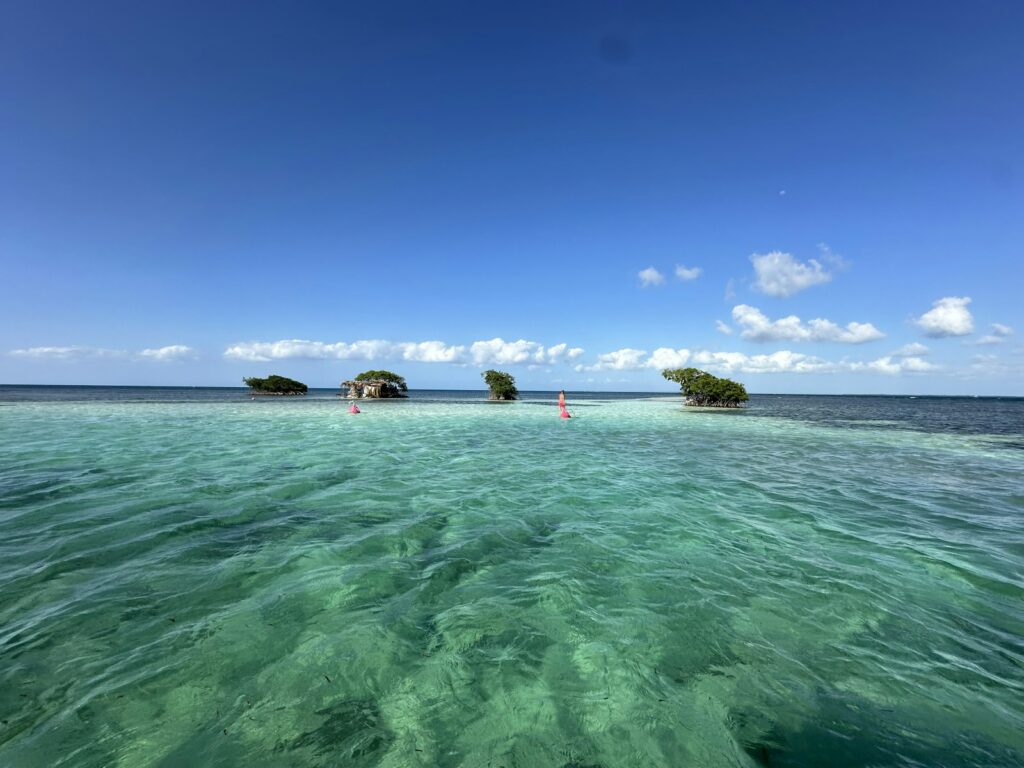
Kelor Island snorkeling takes place on a shallow fringing reef that runs along the beach to roughly 1–3 metres depth. The island sits close to a channel between Komodo National Park’s western islands, and that channel position is the single most important thing to understand before you get in the water here — because the same geography that makes the beach calm on its lee side sends noticeably stronger flow around the headlands at anything above mild tide.
That is the honest summary. Kelor is photographed everywhere — the hill climb to its narrow ridge with Rinca and Komodo in the background is one of the iconic viewpoints in the whole park — and operator itineraries list it as a snorkel stop without much elaboration. What they rarely say is that the underwater experience is thin by Komodo standards. I am telling you now so the water visit isn’t a letdown after that hill.
What the Reef at Kelor Actually Looks Like
The fringing reef begins almost at the waterline on the sheltered beach side. Depth in the main snorkel band runs roughly 1–3 metres, with a sandy seabed visible underneath. Coral coverage is genuine but patchy — hard coral formations, scattered brain and table corals, the usual Indo-Pacific reef fish (parrotfish, wrasses, damselfish, the occasional butterflyfish working the coral heads). It is not the richest reef in the park. Siaba Besar, which holds multiple green turtles per session and runs to 6 metres with consistent current protection, is better structured. Kanawa’s house reef delivers more continuous coral and cleaner visibility. Kelor is what it is: a short, shallow exploratory reef appropriate for a 20–30 minute swim, not a site that rewards an hour of patient hovering.
Visibility tracks park-wide conditions — typically 15–25 metres in the dry season (April–November), dropping toward 10–15 metres in the wet season when river runoff and plankton loads increase. Those figures come from resort climatology data compiled for central Komodo; Kelor’s proximity to the channel may affect local turbidity around tidal transitions, but I have no site-specific visibility record to give you. The broader seasonality table at the end of this page and on our best-time guide applies here as a reasonable proxy.
The Current Reality: Why Tide Timing Matters More Here Than at Most Stops
Kelor sits near a channel. That single sentence carries real practical weight. On the calm lee side of the beach at mild tide, the water is genuinely easy — gentle, clear, suitable for nervous first-timers in a life jacket. Come back at the same spot on a running tide and the conditions are different enough that a guide will redirect you or shorten the swim. Off the headlands, at any notable tidal movement, the flow is strong enough to qualify as hazardous for weak swimmers and a workout for confident ones.
Reputable operators read the tide before they decide how long to run the water stop. If they shorten it or skip it, that is good practice, not laziness. Budget boats sometimes push clients in regardless — it is one of the questions worth asking before you book. The per-spot current grades below summarise the situation.
- Lee-side beach, slack or mild tide
- Calm — suitable for beginners and weak swimmers with a life jacket. Current grade: low.
- Lee-side beach, running tide
- Moderate pull — manageable for confident swimmers; stay close to the beach and follow your guide. Current grade: moderate.
- Off the headlands, any stage of tide
- Strong — this is channel-adjacent flow. Beginner and weak swimmers should not approach the headlands. Current grade: strong.
The upshot: Kelor snorkeling is either beginner-manageable or intermediate-demanding depending almost entirely on tide timing. Ask your operator what the tidal window is on your trip date. If they cannot answer, treat that as information about the operator.
Skill Level and Honest Grades
Below is the grading I would apply to Kelor compared to the other main stops on a standard day itinerary. This is a direct comparison — not a ranking of enjoyment, which depends on conditions that day — just an honest read of the access requirements.
| Site | Depth range (approx.) | Current grade | Minimum skill level | Beginner verdict |
|---|---|---|---|---|
| Kelor (lee side, slack tide) | 1–3 m | Low | Any (life jacket fine) | Yes, with conditions |
| Kelor (running tide / headlands) | 1–5 m+ | Moderate–Strong | Confident swimmer | No |
| Siaba Besar | 2–6 m | Low | Any | Yes — best beginner site |
| Kanawa | 1–8 m | Mild–protected | Any | Yes |
| Taka Makassar (sandbar edge) | 0.5–10 m | Low on bar / Strong at edges | Any on bar; intermediate at edges | Stay on the bar |
| Karang Makassar / Manta Point | 5–15 m open water | Strong (drift site) | Intermediate minimum | Only with guide in water |
| Mawan | 3–8 m | Strong | Experienced swimmers only | No |
Depth ranges and current grades are assessed from available documentation and inferred for sites where no instrumented data exists (last verified June 2026). Current conditions on any given day depend on tide phase, season, and local swell — always defer to your guide’s call on the water.
Kelor vs. The Hill: Which is the Actual Draw?
This is the honest thing that most operator pages avoid saying. The hill is the draw. The climb up Kelor’s narrow ridge takes perhaps 15–20 minutes of moderate exertion (the path is steep and sun-exposed — go early, bring water), and the view from the top across the islands and sea is genuinely worthwhile. It is an iconic park photograph. The snorkel is the secondary activity, included because the boat is anchored there anyway.
If your day itinerary already includes Siaba Besar for turtles, Kanawa for a coral garden, and Karang Makassar for mantas, adding Kelor as a fourth snorkel stop starts to feel like time in the water rather than quality time in the water. The combination that makes Kelor worth a full stop is: (1) you do the hill, and (2) you snorkel briefly on the lee side at a calm tidal window. That is a genuine 45-minute experience with two distinct things to do. Skipping the hill and just snorkeling is a 15-minute reef that other spots in the park do better.
Ready to build an itinerary around sites that suit your skill level and interests? Use our planning form — or message the concierge team on WhatsApp for a same-day response. They book through Komodo Luxury, a sister brand within Juara Holding Group, disclosed; no one can pay to change what we publish here, and if you use our free planning help and proceed with the partner, they may pay us a referral fee at no extra cost to you.
Marine Life: What You Might See (and What You Won’t)
Reef fish are reliable at Kelor — the shallow hard coral structure supports the standard Indo-Pacific community. Parrotfish picking at coral, damselfish defending territories, wrasses cruising the bottom, occasional moray in a crevice. For a family with children who have never snorkeled before, a 20-minute window here has enough to point at and follow. But I will not dress it up more than that.
Turtles are possible but not the defining feature here the way they are at Siaba Besar, where multiple green turtles resting in 2–4 metres is simply the norm. If you specifically want turtles, go to Siaba Besar and treat Kelor as the hill stop. If you want mantas, Karang Makassar is the site — mantas feed in the top 0–5 metres and are genuinely visible from the surface, most reliably around November to February though present year-round. Kelor does not deliver that.
Reef sharks are a possibility off the headlands where the current brings in fish, but the conditions that produce that sighting are the same conditions that make the swim challenging. It is not a controlled shark-spotting experience. Komodo’s best shark viewing for non-divers happens incidentally, not by design at a specific spot.
Kelor in the Context of a Full Day Trip
Standard shared speedboat day trips from Labuan Bajo — typically priced in the Rp 1.4–1.6 million per person range (approximately USD 85–100), park fees excluded — run six stops on the classic itinerary: Padar hill, Komodo dragon trek, Pink Beach, Taka Makassar, Manta Point, and then one or two of Kanawa/Kelor/Siaba Besar depending on time. The total park entry for foreign visitors runs Rp 275,000 minimum (entrance plus harbour fee) up to Rp 375,000 if the contested conservation fee is applied — bring Rp 400,000–550,000 cash for a full itinerary including ranger shares. All fee figures are last verified June 2026; confirm with your operator, as the fee structure under PP 36/2024 is not yet independently verifiable from official text.
Where Kelor lands in that run matters. It tends to come after the Padar and Komodo visits, which means by mid-morning. The hill is best before the sun is overhead and the rocks are radiating heat. If your boat is running to schedule, the combined hill-plus-snorkel window at Kelor is typically 30–45 minutes. That is enough for both if you do not dither on the summit — not enough if you linger at the top for photos and then expect a leisurely reef swim.
Private charter day trips — around Rp 6–10 million for 2–6 passengers on a small speedboat, or Rp 10–18.5 million for a larger or premium vessel — give you the flexibility to extend the Kelor stop, choose your tidal window, and skip back if the current is running wrong. That flexibility is the core argument for going private. If you are a confident swimmer who genuinely wants to explore the headland reef, a private boat that can time Kelor at near-slack is a meaningfully different experience to a shared boat on a fixed schedule. All price ranges are last verified June 2026 and subject to seasonal variation.
Gear Notes for Kelor Specifically
At 1–3 metres depth with good visibility, the basic mask-snorkel-fins combination is all you need. Most shared day boats include mask and snorkel; fins are sometimes included, not guaranteed — check before boarding, and if fins matter to you, a phone call to the operator the day before resolves it. Quality on budget boats ranges from serviceable to scratched and poorly fitting. A personal mask is worth owning if you snorkel more than once a year: fit and seal are important in any conditions, and in Kelor’s occasional chop near the headlands, a leaking mask is more distracting than it needs to be.
Water temperature at Kelor sits in the same range as the rest of northern Komodo waters: approximately 28–29°C from January to May, dropping to 25–27°C through July to September. A rashguard and leggings are adequate for most people across the whole dry season. A 2–3mm shorty wetsuit adds warmth for July–August sessions and is worth considering if you spend a lot of time in the water. Reef-safe mineral sunscreen is strongly recommended as best practice — there is no legal ban on oxybenzone-based sunscreens in Indonesia as of June 2026, but the reef here, however shallow, does not benefit from chemical formulations running off at the surface.
Practical Summary for Planning
Here is what I would tell a reader who emails asking whether to include Kelor on their itinerary.
Include it if you want the hill view — it is genuinely distinctive and takes less than an hour total. The snorkel is a pleasant add-on, not the reason to go. For a first-time snorkeler who wants maximum underwater time, Siaba Besar or Kanawa are better primary reef stops. For someone who wants the full Komodo day experience and is comfortable with a mixed land-water itinerary, Kelor works well in context. If the tide is running when you arrive and the guide redirects you, do not argue: the hill still delivers.
Check our complete spots guide for side-by-side grades on every major site, and our seasonality page for the month-by-month visibility and current picture. To build a custom itinerary that places you at the right spots for your skill level and travel dates, plan your trip with the concierge team — they will sort the tidal window, the boat type, and the sequence. WhatsApp planning is available for quick questions if you are already on the ground in Labuan Bajo.
Frequently Asked Questions
Is the snorkeling at Kelor Island worth it?
It depends on what you are comparing it to. Within a full Komodo day trip, a brief snorkel on the lee side at mild tide is a pleasant addition to the hill visit. As a standalone snorkel experience, Kelor is below average for the park — the reef is shallow and limited. If you have a choice of where to spend your in-water time, Siaba Besar (turtles) or Kanawa (continuous coral) offer more per minute underwater. Kelor is genuinely worth the stop; just come for the hill first and treat the reef as a bonus.
Can beginners and non-swimmers snorkel at Kelor?
On the sheltered beach side at slack or mild tide, yes — the depth is 1–3 metres, the water is calm, and operators routinely put life-jacketed non-swimmers in here without issue. The key caveat is tidal timing: on a running tide, current increases noticeably, and off the headlands the flow is strong at any stage of the tide. Non-swimmers and weak swimmers should stay on the lee beach side only and follow the guide’s instructions. Indonesian law requires life jackets for all passengers, and reputable guides carry them in the water at current-prone sites.
Are there turtles or mantas at Kelor Island?
Turtles are possible but not reliably present the way they are at Siaba Besar, where multiple green turtles per snorkel session is a normal outcome. Mantas are not associated with Kelor specifically — they feed and aggregate at Karang Makassar (Manta Point), further into the channel. If turtles are your priority, ask your operator to include Siaba Besar. If mantas are your priority, Karang Makassar is the site. No operator can guarantee either sighting anywhere in the park.
How long does the Kelor Island stop typically last on a day trip?
On a standard shared day-trip schedule, the combined hill climb and snorkel stop at Kelor runs approximately 30–45 minutes. That is generally enough for both activities if you move at a reasonable pace. Private charters can extend this to as long as you want, which makes a difference if you want to time the swim to the best tidal window or linger on the summit. If you are on a shared boat with six stops in a day, time management is tight across the full itinerary.
What time of year is best for snorkeling at Kelor Island?
The dry season from approximately April through November gives the clearest water and most settled seas park-wide. Visibility in the central Komodo area runs roughly 20–25 metres in April–June, typical reported ranges from resort climatology data (last verified June 2026). July through September sees slightly reduced visibility — around 15–25 metres — from the colder, upwelling-influenced water, though the seas are calm and conditions are generally reliable for day trips. December through February brings the west monsoon: rougher seas, reduced visibility, and occasional KSOP harbour closures at short notice. If you are travelling in those months, build buffer days into your itinerary.