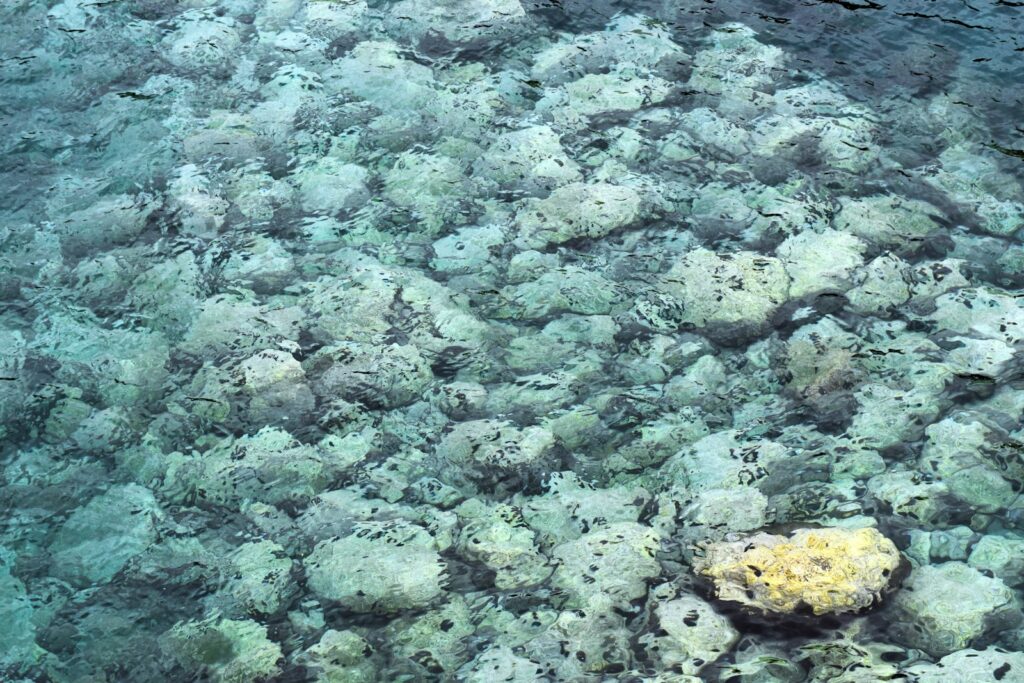
Seniors snorkeling Komodo is genuinely achievable at 60, 70, and beyond — but only when the itinerary is matched to how you move, not the one printed on every shared-boat flyer. The park contains six to eight commonly visited snorkel sites that vary enormously in current strength, entry method, and depth. Two of those sites are calm, shallow, and beach-entry. The rest range from moderate to genuinely demanding drift snorkeling in open-water current. Knowing which is which before you board is the whole game.
We have been guiding snorkelers at these sites for years, reading the current at Karang Makassar before anyone gets in the water. We have brought 70-year-olds to Siaba Besar and watched them float face-down above green turtles for forty minutes without a care. We have also had to pull guests off the ladder at Manta Point when the tide was running hard and it simply was not the day. Both outcomes were planned — only the second one required a plan to not snorkel. This guide is about knowing the difference in advance.
The Honest Spot-by-Spot Picture
Not all Komodo snorkel sites carry the same physical demands. Here is how the most commonly visited sites break down for older travelers, graded on current, entry method, and depth — so you can have a real conversation with your operator rather than a reassuring one.
The Senior-Friendly Picks
Siaba Besar is the site we recommend first, without hesitation, for guests who want a comfortable, rewarding snorkel. The reef is shallow — main band roughly 2 to 6 metres, well within easy surface observation. Current here is consistently mild in the protected zone. Most importantly, it delivers. Multiple green turtles per session is the norm, not the exception; we have rarely guided a morning at Siaba Besar when we did not see at least three. Entry is from the boat ladder into calm water. You do not need to be a strong swimmer, and you do not need to kick hard. Float, breathe, look down. That is the whole technique required.
Kanawa Island is beach entry from a sheltered bay — you walk in from sand into water that starts at roughly one to two metres and slopes gradually to five or eight metres at the reef edge. Current is rated mild to protected. The coral health here is solid, visibility is typically good across the park’s dry season window, and the beach itself is a comfortable rest stop between snorkels. For travelers who are hesitant about climbing a boat ladder in open water, Kanawa’s beach entry is a meaningful practical advantage.
Taka Makassar — the sandbar — offers a different kind of experience. At low tide the bar is exposed, and the immediate shallows of 0.5 to 2 metres make for genuinely effortless floating over sand and small bommies. Slack tide on the bar is beginner-easy. The important caveat: the edges of the sandbar drift toward the manta channel and can become hazardous on a running tide. A guide who reads the tide before entry makes Taka Makassar a lovely gentle stop; without that judgement, it is a different proposition entirely. This is a place where the quality of your guide matters more than almost anywhere else on the circuit.
The Drift Sites: Worth Being Honest About
Karang Makassar (Manta Point) is a drift snorkel over open water above a rubble and sand plateau. Current here is widely described as strong; the tide-dependent flow is the thing that makes mantas aggregate and feed at the surface, and it is also the thing that makes weaker swimmers uncomfortable or unsafe. Operators with good judgment skip the entry entirely when the current runs too hard — that is not a failure, it is exactly the right call, and it is worth asking your operator directly: “What do you do when the current at Manta Point is strong?” The answer tells you more about the operator than any marketing material.
Snorkelers do genuinely see manta rays from the surface at Karang Makassar — mantas feed in the top zero to five metres of water and sometimes break the surface on calm mornings. That is real. What is also real is that this site is intermediate-plus, and for a 70-year-old traveler who has not snorkeled in ten years, arriving at a running drift site on a shared boat with no guide in the water is not the right first experience. If manta rays are the reason you are making this trip, a private charter that can hold position, wait for slack, and put a guide in the water alongside you is worth every rupiah of the premium.
Mawan — occasionally on longer or private itineraries — carries a strong current rating and is genuinely for confident, experienced snorkelers only. For most seniors, it is a skip, full stop. There is no loss in skipping it; Siaba Besar and Kanawa together deliver a better snorkel experience for most 60+ travelers than Mawan on a running tide.
Site Summary at a Glance
| Site | Current Grade | Entry Type | Depth (main snorkel zone) | Senior Suitability |
|---|---|---|---|---|
| Siaba Besar | Mild–protected | Boat ladder | 2–6 m | High — top pick |
| Kanawa Island | Mild–protected | Beach entry | 1–8 m (gradual) | High — beach entry advantage |
| Taka Makassar bar | Mild at slack tide; hazardous on running tide | Boat ladder / wade from bar | 0.5–2 m on bar | Medium — tide-dependent |
| Pink Beach | Semi-sheltered bay, variable | Beach entry | 1–5 m near shore | Medium — check micro-conditions |
| Karang Makassar | Strong drift (tide-dependent) | Open-water ladder | 5–15 m (surface float) | Low–Medium — current is the variable |
| Mawan | Strong | Open-water ladder | 3–8 m | Low — skip unless very confident |
Depth ranges and current grades based on reported operator and guide assessments; last verified June 2026. Individual conditions vary by tide and season — always confirm on the day with your guide.
Boat Entry: The Detail Nobody Mentions in the Brochure
Getting in and out of the water is the physical challenge that matters most for many older travelers, and it is almost never described honestly in tour listings. Here is what actually happens on most Komodo day boats.
The standard shared speedboat ladder is a narrow aluminum or stainless step-ladder on the stern, usually three to four rungs, hanging in open water. There is typically a grab rail on each side. In calm conditions with a guide steadying you from the water and a crew member on deck, this is manageable for most adults. In chop, or when the boat is moving on a slight swell, it becomes considerably more demanding — the ladder swings, the rungs are wet, and you are working against buoyancy in a life jacket while trying to place your feet accurately. For guests with hip replacements, arthritic knees, or reduced lower-body strength, this is the moment that determines whether the day is enjoyable or stressful.
Beach entry sites — Kanawa, Pink Beach — remove that variable entirely. You walk in from a stable surface at your own pace. For many 60+ and 70+ travelers, a private itinerary deliberately weighted toward beach-entry sites is simply a better day, independent of the snorkeling quality at any particular reef.
If you are booking a private charter, ask explicitly: “Does the boat have a wide-step or low-profile ladder?” and “Will a guide be in the water to assist with entry and exit?” On reputable private and semi-private boats, guide-in-water is standard practice. On shared open-trip boats, it varies by operator and by crew capacity on the day. This is one of several reasons the private charter premium is not just about exclusivity for older travelers — it is a functional safety question.
Private Charter vs Shared Boat: The Pacing Question
The standard shared speedboat day trip from Labuan Bajo runs a circuit of five or six stops — typically Padar Island hike, Komodo dragon trek, Pink Beach, Taka Makassar, Manta Point, and one more snorkel stop. It departs early, around 6:00 to 7:00 am, and the schedule is fixed. The boat is not waiting for you when you are tired on the ladder at stop four. Other passengers are watching. The guide is trying to keep a group of twelve to twenty people moving.
For a traveler in their 30s who snorkels regularly, this is fine. For a 68-year-old who has not done serious physical activity in a week of flights and hotels, the accumulated physical toll — long boat rides, a steep hike up Padar in heat, then three snorkel entries in the afternoon — is a different matter. The fixed pace of a shared boat cannot accommodate someone who needs fifteen minutes on deck to recover before the next entry.
A private charter changes this entirely. You set the itinerary focus. If you want two long, unhurried snorkels at Siaba Besar and Kanawa with a proper lunch break in between, that is your day. You skip Padar if you want. The guide adjusts to the conditions you want rather than the conditions the tour operator printed six months ago. You also skip Manta Point when the current is too strong without any social pressure from other passengers who drove seven hours to see a manta ray.
Private speedboat charters for two to six passengers from Labuan Bajo run roughly Rp 6 million to Rp 10 million per day for standard boats; larger or premium vessels are Rp 10 million to Rp 18.5 million per day (last verified June 2026 — confirm current rates with operators, as these fluctuate with fuel costs and season). Park entrance fees for foreign visitors are approximately Rp 250,000 per person per day, plus a harbor fee of around Rp 25,000 per person — bring cash. A conservation fee of Rp 100,000 per person is reported by some sources but not confirmed by others; flag that with your operator before departure.
Split between two to four people, private charter costs are not as dramatic as the headline number suggests. And when you factor in the pace, the flexibility on entry conditions, and the dignity of moving at your own speed, the arithmetic often resolves in favor of private for 60+ travelers.
If you are ready to talk through options, plan your trip with our concierge — we can help you build an itinerary that matches your pace and prioritizes the right sites. Alternatively, reach out via WhatsApp for a quick conversation before you commit to anything.
Sun, Heat, and Hydration on Long Deck Days
Komodo sits in one of the hotter, drier parts of Indonesia. In the dry season from April to November — which is also peak snorkeling season — temperatures on deck easily reach 32 to 35°C, and the combination of direct sun, reflected light off water, and physical exertion from snorkeling extracts more from the body than many travelers expect.
Dehydration on a long boat day is a real risk for older travelers, not a minor inconvenience. The early start means many people skip or rush breakfast; seasickness medication taken before departure can have diuretic effects; and the excitement of the first few stops often means people forget to drink. By stop three, you are already running behind on fluids in a way that affects energy and judgment.
Practical protocol: drink at least 500ml of water before boarding; carry a minimum of 1.5 litres for the day beyond whatever the boat provides; keep a bottle in reach on deck rather than packed away; wear a wide-brim hat or buff for transit between stops. The dry-season wind on a moving speedboat feels deceptively cool — you are still in full UV exposure.
For thermal protection in the water, a rashguard and leggings are sufficient at the 27 to 29°C water temperatures typical from April to June and October to November. In July through September, water drops to around 25 to 26°C in central Komodo — a shorty 2-3mm wetsuit adds meaningful comfort on a long session, and renting one from a Labuan Bajo dive shop the day before is straightforward for most operators. Southern park sites can be several degrees cooler still from Indian Ocean upwelling; if your itinerary includes those sites, factor accordingly.
Reef-safe mineral sunscreen is strongly recommended — both for the coral’s benefit and because conventional oxybenzone-based sunscreens degrade faster in high UV conditions. There is no legal ban on conventional sunscreens in Komodo as of June 2026 (unlike Hawaii or Palau), but mineral is the better-practice choice regardless.
The Fitness-Honesty Conversation
Every operator I respect runs a version of this conversation before departure: “Are there any mobility limitations I should know about? Any medical conditions that affect activity in heat or water?” Most passengers say everything is fine. Some of them are telling the truth. Some of them have had recent joint surgery or carry a cardiac condition they would rather not mention to a stranger.
This is not about gatekeeping. Snorkeling with a life jacket in calm, shallow water is one of the lowest-intensity water activities available. Most people with mobility constraints, including hip and knee replacements, can snorkel perfectly well at the right sites. But the guide needs to know. Entry method, in-water supervision level, which sites to include or skip, whether to have a crew member assist on the ladder — none of these decisions can be made well without the information.
Have that conversation honestly with your operator or concierge before you book, not on the boat on departure morning. It is a practical question, not a medical screening. A good operator will use the information to build you a better day, not to exclude you.
Along the same lines: travel insurance that covers water activities, evacuation by speedboat to Labuan Bajo, and medical treatment in Flores is not optional for travelers over 60. The nearest hospital with meaningful surgical capacity from central Komodo is in Labuan Bajo, roughly two to three hours by fast boat from the outer sites. A comprehensive policy that covers these eventualities is a straightforward purchase relative to the cost of the trip — ask your insurer specifically about snorkeling as an activity and check that the coverage extends to Indonesia. Buy it before you leave home, not after a health event makes it impossible.
Gear Notes for Older Snorkelers
Mask fit matters more for older faces than it does for younger ones — the seal geometry changes with facial structure over time, and a rental mask that fits a 25-year-old crew member is not the mask that fits you. Budget boat rentals in particular are scratched, tired, and selected from a pile without any fit check. Fogging and leaking waste a snorkel session faster than any current.
If you have not snorkeled recently, one specific gear investment is worth it: buy or bring your own mask. A properly fitted mask purchased at home (most sporting goods shops carry them; dive shops can fit them with anti-fog prep) removes the single biggest in-water frustration. Fins are less critical — the rental fins on day boats are usually functional, and for gentle drift snorkeling at Siaba Besar or Kanawa you do not need to kick hard regardless.
For travelers with a prescription, some established Labuan Bajo dive shops stock corrective lens inserts for common diopters, but availability is not guaranteed and selection is limited. Bring your own prescription mask if this applies to you — it makes a real difference to the experience.
Life jackets are provided on Indonesian tour boats by law, and guides commonly require them for guests who express any hesitation about their swimming confidence. Do not let any social awkwardness stop you from asking for one — or from wearing the one handed to you without being asked. At Siaba Besar in a mild current, a life jacket is not an admission of weakness; it is the correct equipment for comfortable surface snorkeling.
Park Fees: What to Budget
Foreign visitors to Komodo National Park pay a base entrance fee of approximately Rp 250,000 per person per day (last verified June 2026 — confirm with your operator as the fee structure changed under PP 36/2024 following the October 2024 operator protests). Snorkelers do not pay a separate snorkeling surcharge as of June 2026; the old dedicated snorkeling fee from the previous tariff era is no longer itemized in current operator guidance.
The harbor fee runs approximately Rp 25,000 per person. A conservation fee of Rp 100,000 per foreign visitor is reported by some operators and absent from others — contested, so budget for it and ask your operator in advance. If your itinerary includes any island landings (Komodo for dragons, Rinca, Padar), a ranger fee of roughly Rp 200,000 per group of up to five applies per island. Snorkel-only trips with no island landings can skip this.
Bring cash in small denominations. Cards are not accepted for park fees. Budget Rp 400,000 to Rp 550,000 per foreign visitor for a full-day itinerary including island landings; Rp 275,000 to Rp 375,000 if snorkel-only with no trekking stops.
Park tickets are now booked in advance through the SiORA online reservation system, which reportedly became mandatory in April 2026 following a trial period earlier in the year. Walk-in ticket sales at the park are reported to have ended under the new system, though this is based on secondary sources rather than a confirmed official notice as of June 2026. Most reputable operators handle the SiORA booking on your behalf — confirm this is included in the service before you pay.
For Non-Swimmers and Families
If you are traveling with grandchildren or family members who are non-swimmers, the calm sites on a private itinerary work for them too — life jackets in shallow water at Siaba Besar and Kanawa allow non-swimmers to float and observe without any swimming requirement. We have a dedicated guide to snorkeling in Komodo for non-swimmers and a separate piece on family snorkeling with children that covers age-appropriate site choices and the operator questions to ask when traveling with young kids.
Multigenerational trips — grandparents, adult children, and grandchildren on the same boat — work best on a private charter where pace and site selection can genuinely serve everyone on board rather than defaulting to whatever the under-30 segment wants to do.
Ready to plan? Tell us your travel dates, your group size, and what you most want to see — use our planning form or drop us a WhatsApp message and our concierge will come back with a realistic itinerary built around how you travel. Booking with a partner operator may generate a referral fee for us at no extra cost to you; that arrangement never changes what we publish or recommend.
Frequently Asked Questions
Is snorkeling in Komodo suitable for people in their 70s?
Yes, at the right sites and with the right boat setup. Siaba Besar and Kanawa Island are calm, shallow, and accessible without strong swimming ability — green turtles and healthy coral reefs within easy reach from the surface. The key is choosing a private or small-group charter that allows guide-in-water assistance, avoiding strong-current drift sites like Manta Point unless conditions are slack, and being honest with your operator about any mobility considerations before departure. Many 70+ travelers have genuinely excellent snorkels at these sites.
What is the best snorkel site in Komodo for seniors with limited mobility?
Kanawa Island, because of its beach entry. You walk in from sand at your own pace without negotiating a boat ladder in open water. The reef starts in one to two metres of water and the current is consistently mild. Siaba Besar is a very close second — it has a boat ladder entry, but the calm water and exceptional turtle density make it the most rewarding single-site snorkel in the park for most ages.
Do I need to be a strong swimmer to snorkel in Komodo?
Not at the calm sites. Siaba Besar, Kanawa, and the Taka Makassar sandbar at slack tide are all manageable with a life jacket and without confident swimming ability. Drift sites like Karang Makassar (Manta Point) require more — the current moves you whether you like it or not, and you need to float calmly in moving water. If you are not a strong swimmer, ask your operator specifically which stops on the itinerary require swimming capability and arrange to skip or stay on the boat for those.
Should seniors get travel insurance before snorkeling in Komodo?
Yes, and it should be purchased before you leave home. The nearest hospital with serious surgical capacity from the outer park sites is in Labuan Bajo — roughly two to three hours by fast boat from central sites. A policy covering water activities, medical evacuation, and treatment in Indonesia is a straightforward, relatively low-cost step relative to the trip investment. Check explicitly that snorkeling is covered as an activity, and confirm the policy has no age cutoff or senior exclusion that would void the evacuation component. This is not fearmongering — the vast majority of snorkel trips at the calm sites are uneventful. It is just sensible planning for a remote destination.
Can I skip Manta Point if the current is too strong?
Not only can you skip it — on a well-run boat, a good guide will skip it for you when conditions are wrong. Operators who monitor the tide and current at Karang Makassar before committing a group to the water are doing their job correctly. If manta rays are important to your trip, discuss with your operator or concierge which months tend to bring calmer morning conditions (roughly November through February is when plankton-driven surface aggregations peak, though mantas are present year-round), and consider a private charter that can time arrival for slack. You do not need Manta Point to have a great day in Komodo — the turtles at Siaba Besar alone are worth the trip.